Naruto Nanoblock is a collection, not one specific kit. Kawada has released a group of six level-two character figures, a newer group of six level-three action poses, and a separate Mininano blind-box series. Several characters appear more than once, so a listing titled only “Naruto,” “Kakashi” or “Itachi” is not enough to identify what you are buying.
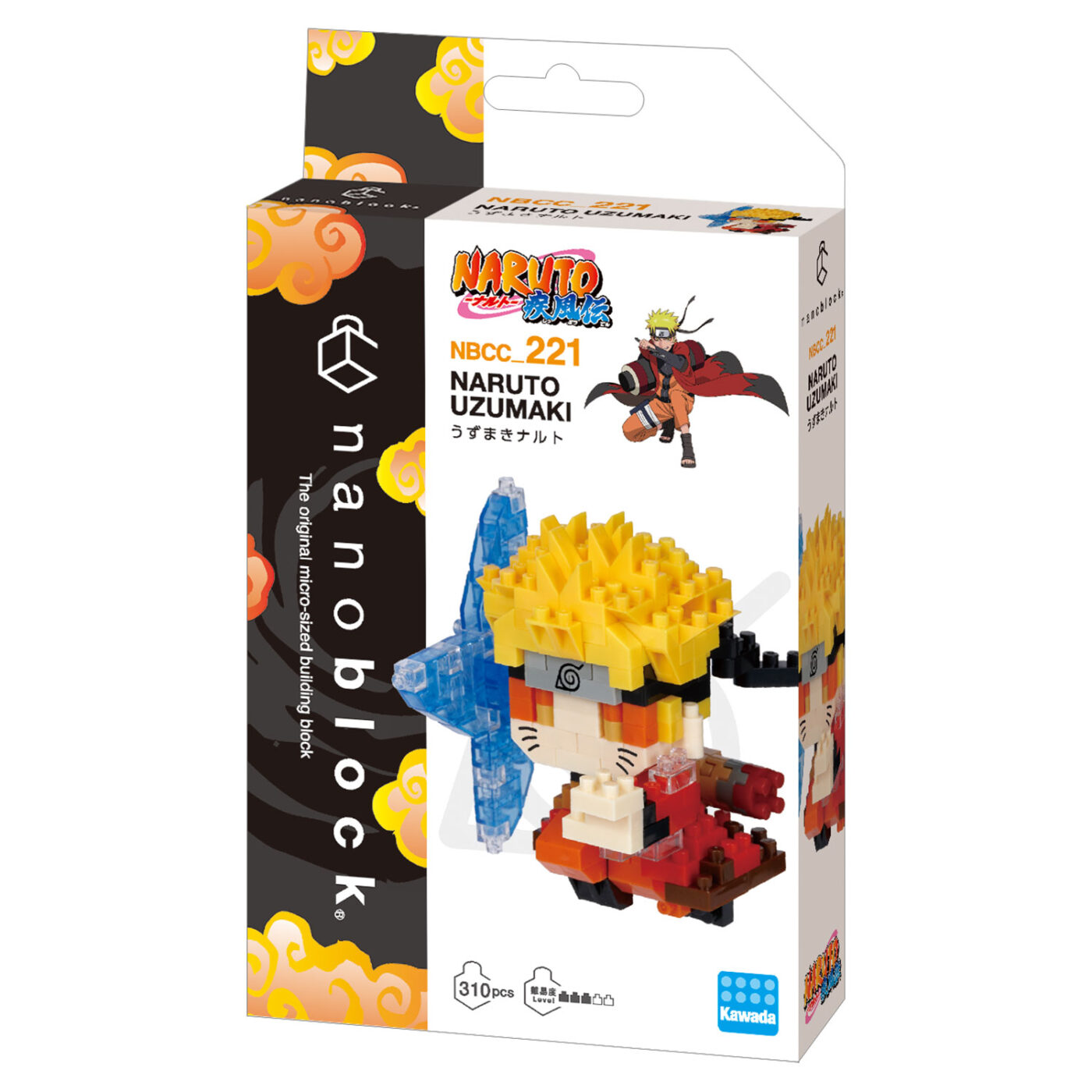
For the most straightforward Naruto figure, start with NBCC_134. Choose NBCC_221 instead if you want Sage Mode, a Rasenshuriken effect and a more involved build. Collectors who want the smallest figures can consider NBMC_45, but individual Mininano bags are blind packaged. This guide compares the verified model numbers and explains how to prepare for the build without treating one creator’s experience as a universal result.
Nanoblockus.com is an independent fan and informational website. It is not an official Kawada, Nanoblock, Naruto, Bandai Namco, Shueisha, TV Tokyo or Pierrot website.
In this guide:
The short answer
The easiest way to understand the lineup is to separate it into three formats:
- NBCC_134 through NBCC_139: six individual Character Collection kits released in Japan on April 20, 2024. Kawada rates all six at difficulty level two.
- NBCC_221 through NBCC_226: six individual action-pose kits released in Japan on July 5, 2025. These use more pieces or more expansive poses, and Kawada rates all six at level three.
- NBMC_45: a six-character Mininano series sold in blind packaging. The figures are smaller, and the character inside an individual bag is not disclosed.
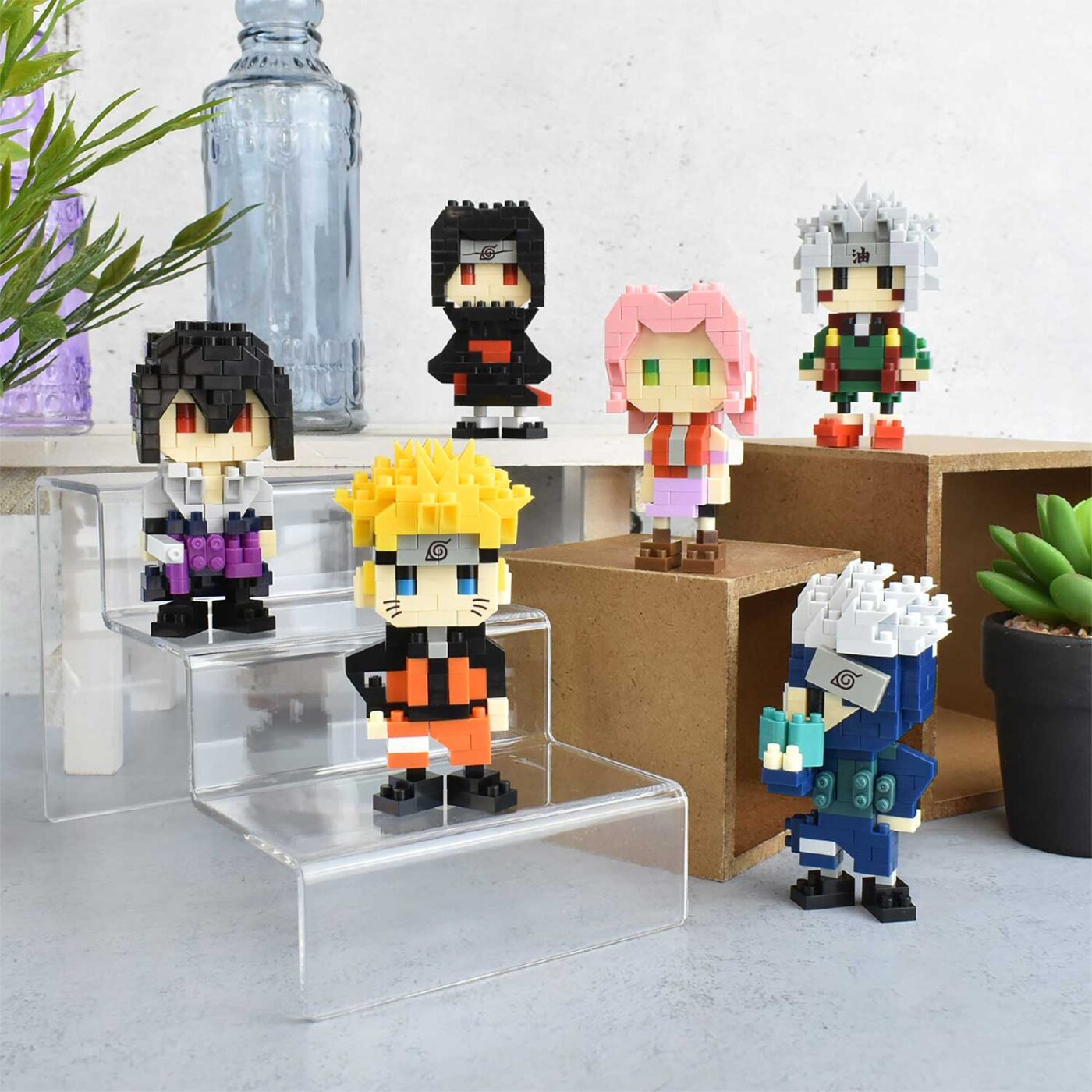
The two Character Collection groups overlap. Naruto, Sasuke, Kakashi and Itachi each have a 2024 figure and a different 2025 figure. Sakura and Jiraiya appear in the 2024 group, while Minato and Gaara appear in the 2025 group. Matching the model code is the simplest way to avoid buying the wrong pose or an accidental duplicate.
Every verified model
Kawada’s catalog provides the figures below. Dimensions are listed in the manufacturer’s width × height × depth order. Release dates and age recommendations are Japanese specifications; packaging and labeling for U.S. inventory may differ.
| Model | Character and design | Pieces | Difficulty | Finished size |
|---|---|---|---|---|
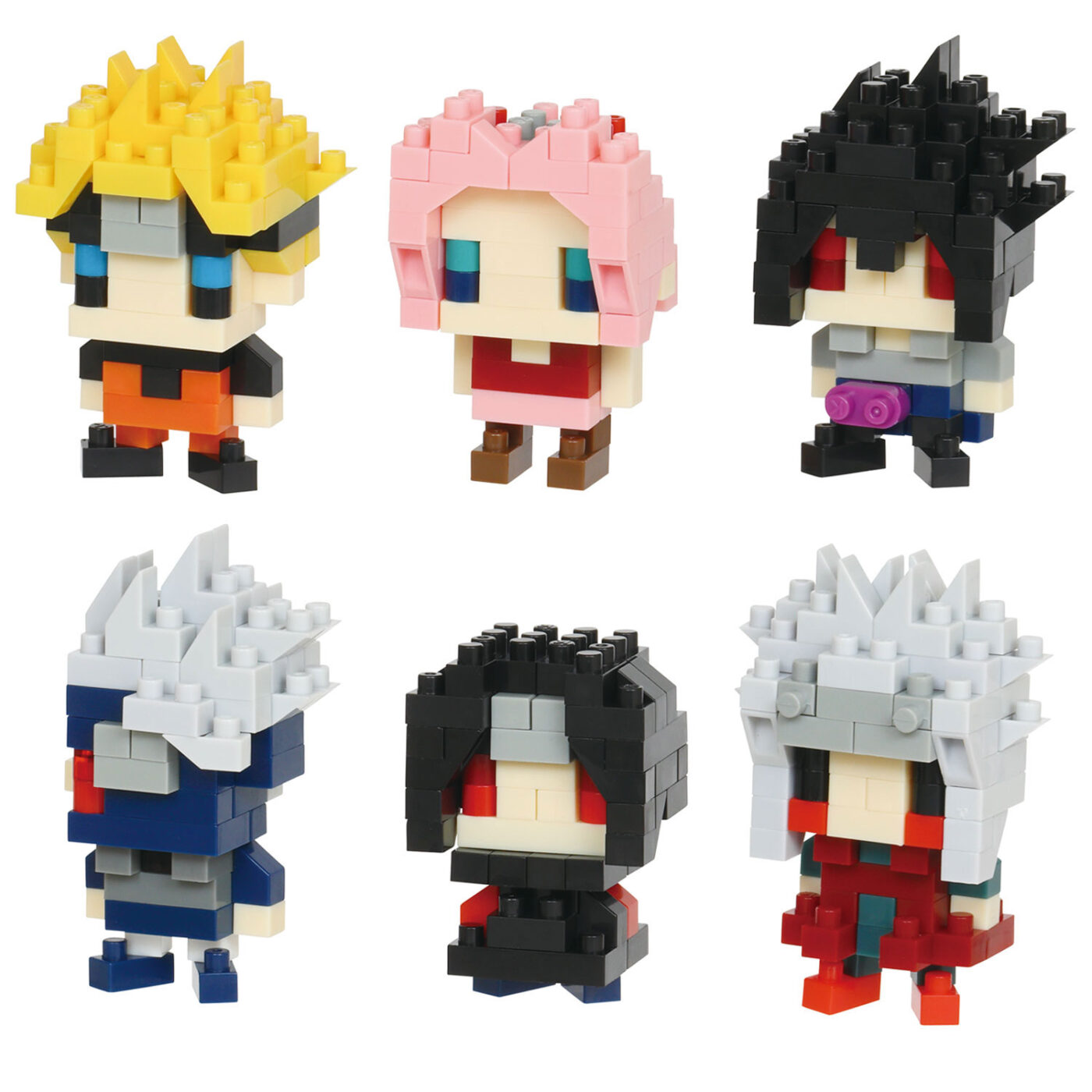
| NBCC_134 | Naruto Uzumaki in his Naruto Shippuden outfit | 180 | 2 | 40 × 75 × 36 mm |
| NBCC_135 | Sasuke Uchiha in his Taka-period outfit | 200 | 2 | 32 × 65 × 50 mm |
| NBCC_136 | Sakura Haruno with her distinctive hair and forehead protector | 160 | 2 | 32 × 65 × 28 mm |
| NBCC_137 | Kakashi Hatake holding Icha Icha Paradise | 180 | 2 | 37 × 75 × 40 mm |
| NBCC_138 | Itachi Uchiha in his Akatsuki clothing | 160 | 2 | 36 × 65 × 28 mm |
| NBCC_139 | Jiraiya with the scroll at his waist | 180 | 2 | 40 × 71 × 32 mm |
| NBCC_221 | Naruto Uzumaki in Sage Mode using Rasenshuriken | 310 | 3 | 55 × 78 × 60 mm |
| NBCC_222 | Sasuke Uchiha using Chidori | 220 | 3 | 44 × 59 × 66 mm |
| NBCC_223 | Minato Namikaze using Rasengan | 280 | 3 | 57 × 66 × 78 mm |
| NBCC_224 | Gaara with his gourd | 270 | 3 | 48 × 74 × 50 mm |
| NBCC_225 | Kakashi Hatake using Lightning Blade | 200 | 3 | 44 × 68 × 45 mm |
| NBCC_226 | Itachi Uchiha activating Susanoo | 260 | 3 | 56 × 68 × 48 mm |
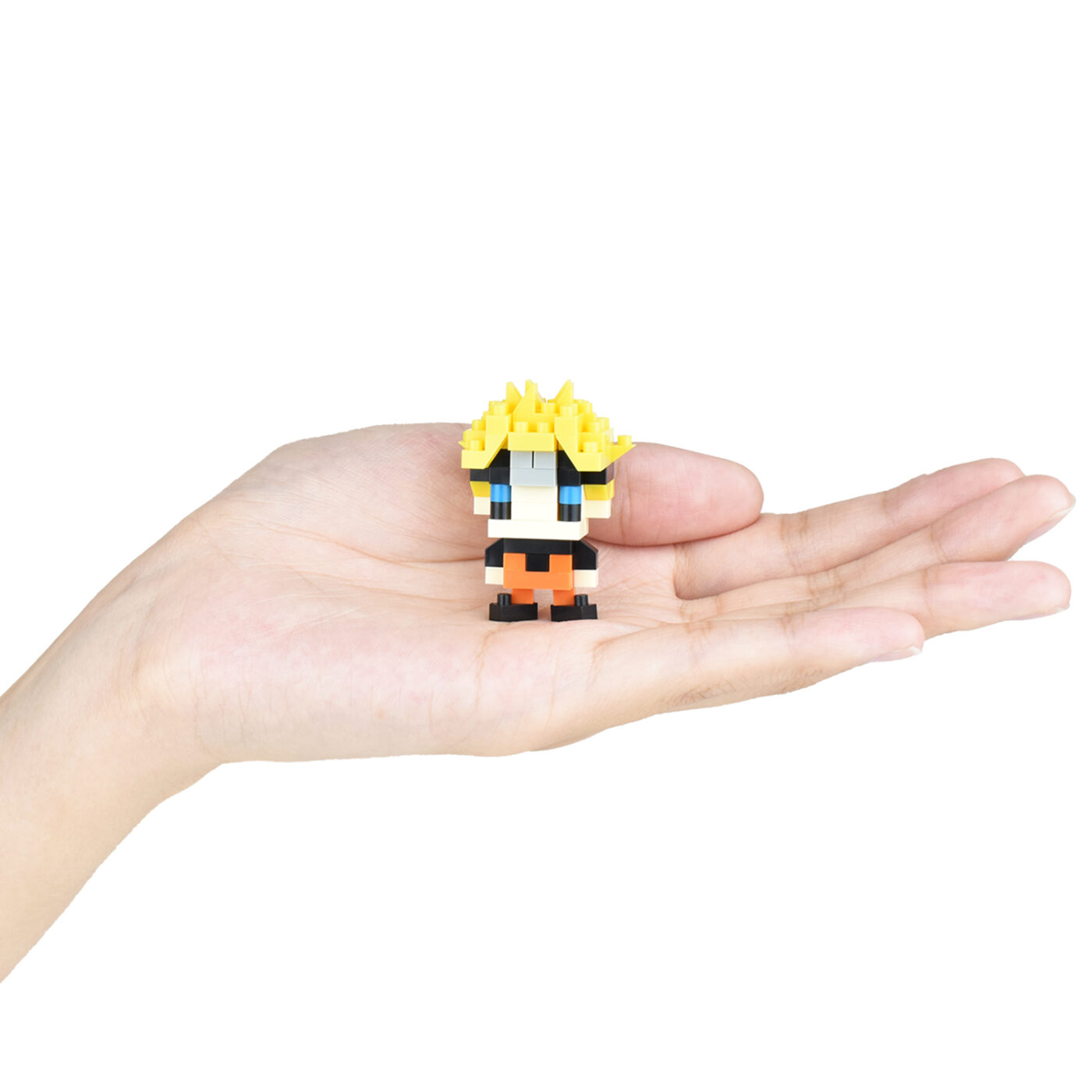
| NBMC_45 | Blind-packaged Mininano: Naruto, Sakura, Sasuke, Kakashi, Itachi or Jiraiya | Varies; Naruto reference figure has 80 | Not listed | Varies; Naruto reference figure is 32 × 41 × 26 mm |
All twelve NBCC figures carry a Japanese target age of 12 and older and use 105 × 180 × 30 mm packaging. Kawada does not list every Mininano character at the Naruto reference figure’s 80-piece count or dimensions, so those numbers should not be applied to all six blind-box designs.
Which set should you choose?
For a first Nanoblock character
Choose from NBCC_134 through NBCC_139. They share a level-two rating and use 160 to 200 pieces, making them a more sensible entry point than the level-three action models. Sakura and the first Itachi have the lowest listed counts at 160 pieces, but piece count alone does not guarantee the easiest assembly; tiny decorative parts and similar colors can still demand careful handling.
NBCC_134 is the safest Naruto-specific starting point. Its standing pose is compact, it uses 180 pieces, and it avoids the wider Rasenshuriken structure of NBCC_221.
For the most expressive display
The NBCC_221–226 group is the stronger choice. Naruto’s Rasenshuriken, Sasuke’s Chidori, Minato’s Rasengan, Kakashi’s Lightning Blade and Itachi’s Susanoo make the techniques part of the silhouette instead of relying only on clothing and hair for identification.
The tradeoff is practical. Every model in this group is level three, and several occupy noticeably more depth than their height might suggest. Minato, for example, is only 66 mm high but 78 mm deep. Check the full width and depth before planning a narrow display ledge.
For a complete Team 7 grouping
The 2024 group contains Naruto, Sasuke, Sakura and Kakashi in one consistent style. That makes NBCC_134 through NBCC_137 the cleanest four-model Team 7 display. The 2025 group does not include Sakura, so combining it into the same arrangement requires mixing figure styles.
For a small surprise collectible
NBMC_45 is the appropriate choice only if blind packaging is acceptable. Its possible characters are Naruto, Sakura, Sasuke, Kakashi, Itachi and Jiraiya. Kawada states that a sealed box contains six bags and completes the six-character lineup, but a single bag does not let the buyer select a character.
NBCC_134 vs. NBCC_221
These are the two full-size Naruto Uzumaki options most likely to be confused in a short retailer title.
| Question | NBCC_134 | NBCC_221 |
|---|---|---|
| Which Naruto is represented? | Standard Naruto Shippuden outfit | Sage Mode using Rasenshuriken |
| Piece count | 180 | 310 |
| Difficulty | Level 2 | Level 3 |
| Finished size | 40 × 75 × 36 mm | 55 × 78 × 60 mm |
| Best suited to | First-time character builders and compact displays | Collectors prioritizing an action pose and more elaborate silhouette |
| Main limitation | Less dynamic pose | More pieces, higher difficulty and a larger footprint |
The finished heights differ by only 3 mm, but that number hides the more useful distinction. NBCC_221 is 15 mm wider and 24 mm deeper, largely because the technique and pose extend beyond the body. The newer model therefore has more visual presence without becoming dramatically taller.
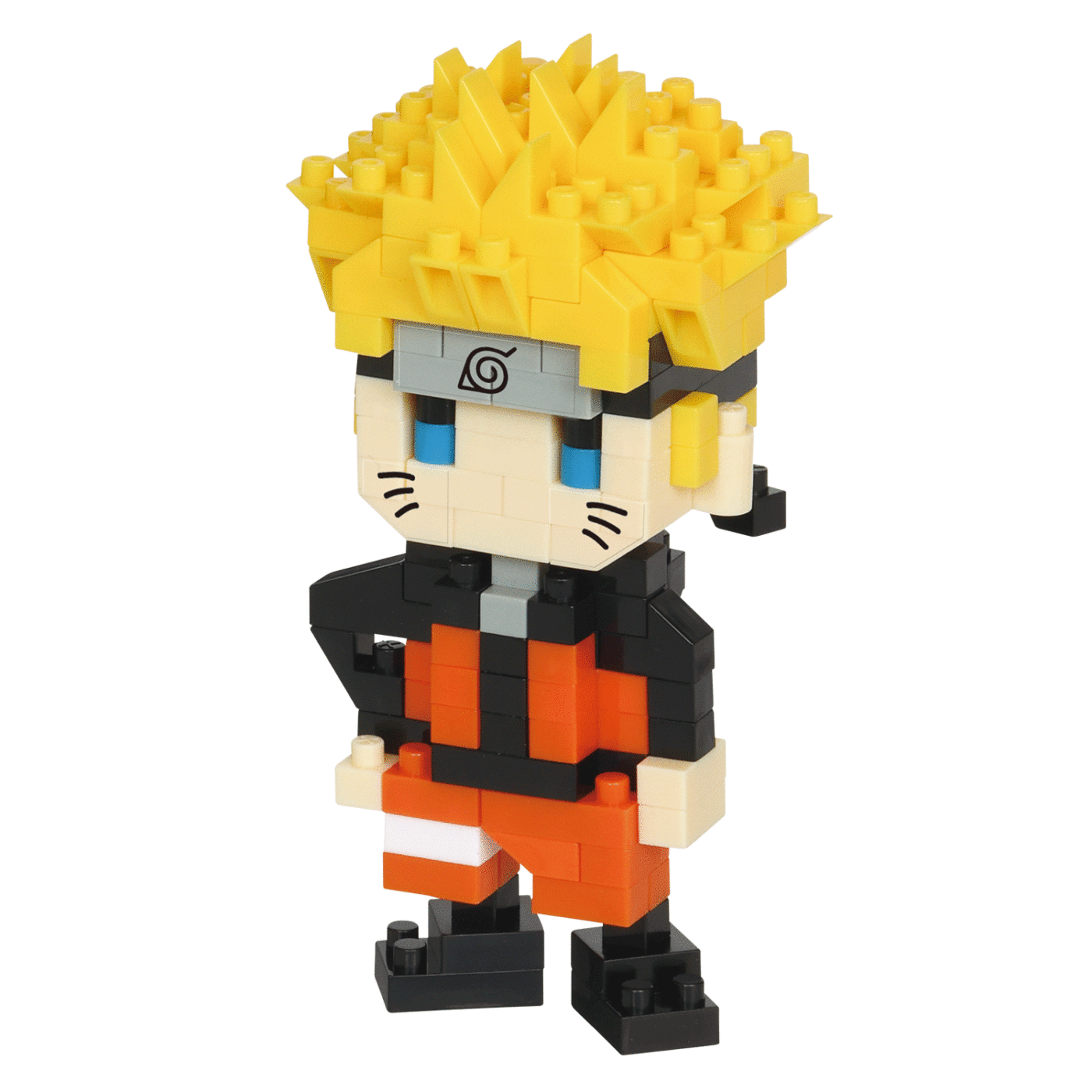
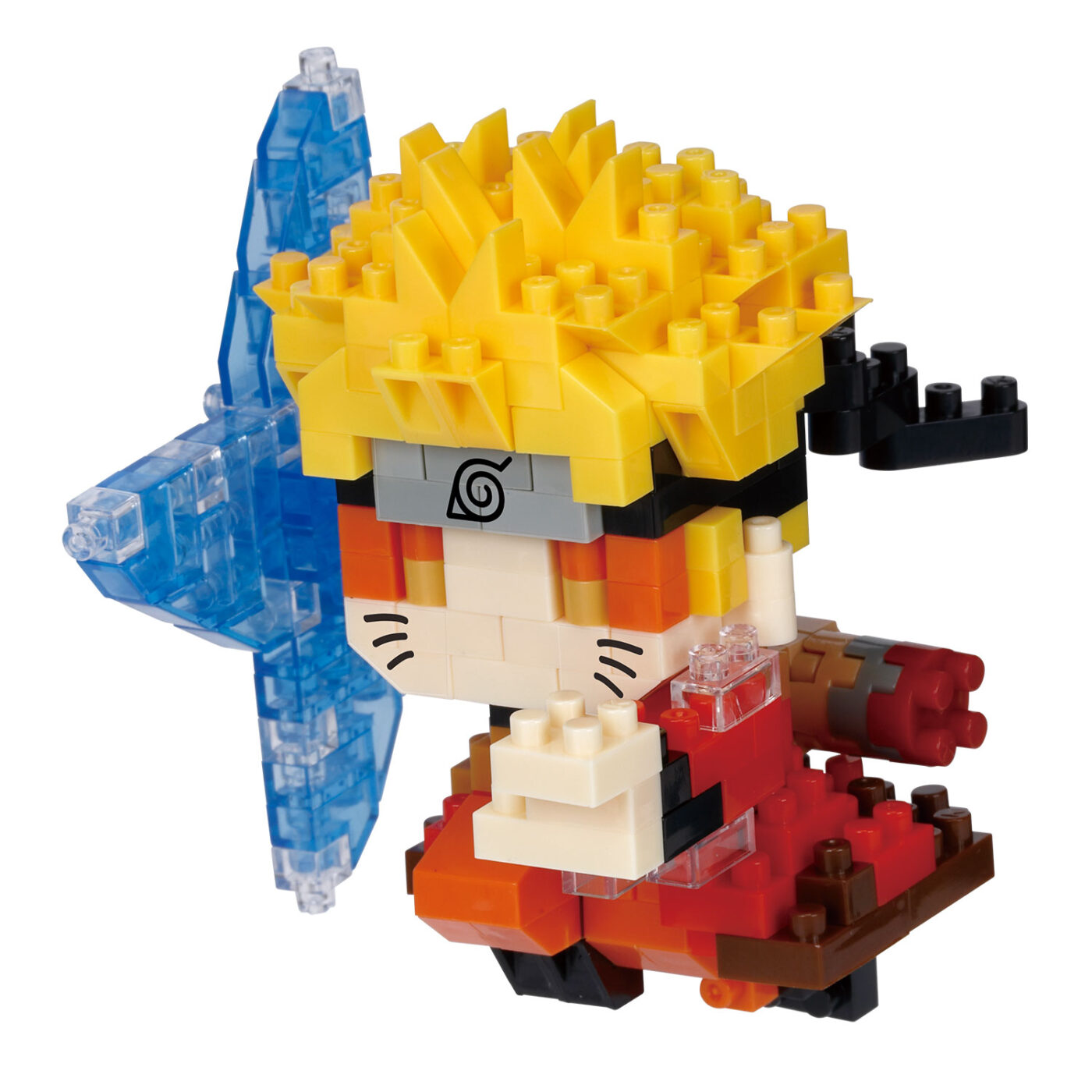
Official product images are linked to the corresponding Kawada catalog pages. Product and franchise rights remain with their respective owners.
Buying in the United States
Search by the model number, not just the character. Retail titles may shorten “Naruto Shippuden Naruto Uzumaki” to “Naruto,” and the same character can now lead to two different NBCC products. A listing for Kakashi should identify either NBCC_137, with the book, or NBCC_225, with Lightning Blade.
Before ordering, compare four details with Kawada’s catalog:
- The NBCC or NBMC model number.
- The character’s pose or represented technique.
- The listed piece count.
- The package photography and licensing information.
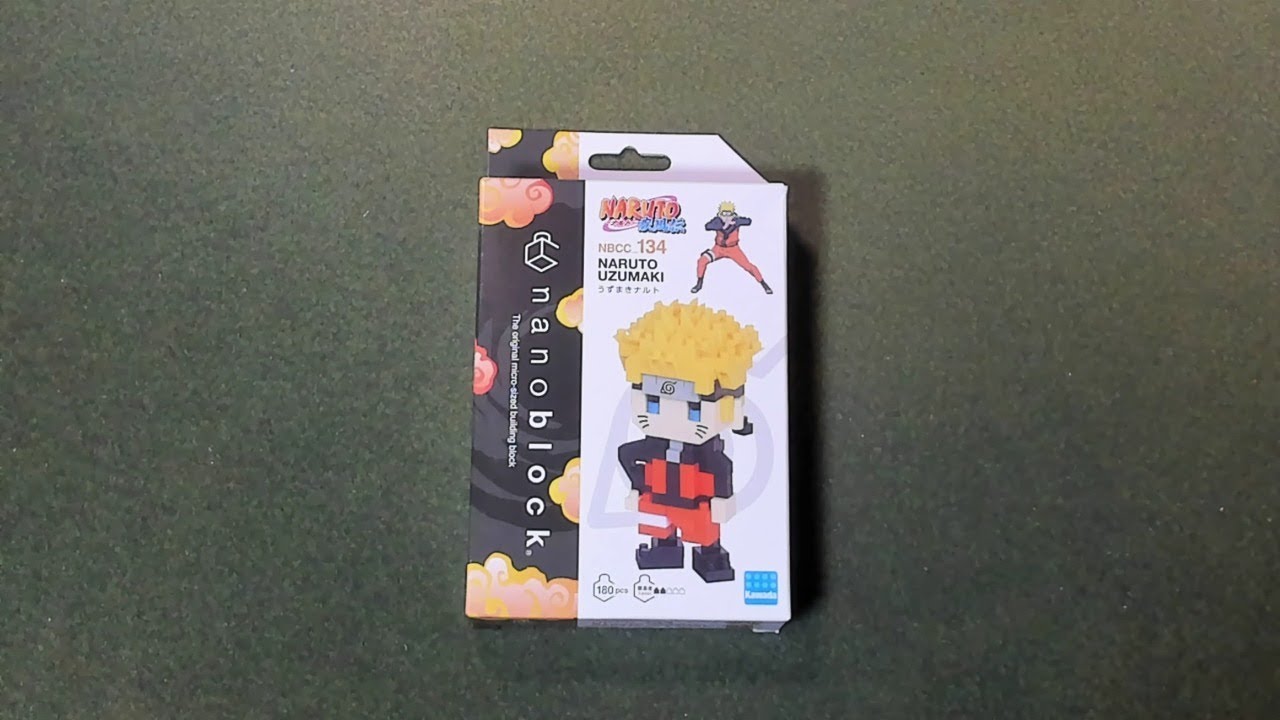
Some U.S. listings state that an authorized product box carries a Bandai Namco warning label. That can be a useful regional indicator, but packaging changes should not be judged from one detail alone. Compare the model number and barcode, buy from a seller with a workable return policy, and retain the box and proof of purchase.
Kawada warns that the dates and prices on its catalog are Japanese specifications and that licensing can limit sales by region. A live manufacturer page therefore confirms that the product exists; it does not guarantee current U.S. inventory. Avoid paying a collector premium until you have searched the exact code across established U.S. retailers and reputable import sellers.
Official Naruto instructions
This guide is a practical companion to the manufacturer’s official instructions. It does not replace the official diagrams.
Kawada provides an assembly-instruction link on each product page. Use the manual for the exact code on the package; the similar names do not make the instructions interchangeable.
| Models | Official instruction access |
|---|---|
| NBCC_134–139 | Naruto, Sasuke, Sakura, Kakashi, Itachi and Jiraiya |
| NBCC_221–226 | Sage Mode Naruto, Chidori Sasuke, Minato, Gaara, Lightning Blade Kakashi and Susanoo Itachi |
| NBMC_45 | All six Mininano instruction links |
Opening the digital manual on a tablet or monitor can make color and stud placement easier to inspect than on a small folded sheet. It also lets you zoom in without copying or republishing Kawada’s copyrighted diagrams.
Prepare before opening every bag
These models are small enough that organization usually matters more than the amount of desk space. A bright, rigid work surface helps with color identification and prevents the finished model from leaning into a soft mat.
- Confirm the code first. Match the box, manual and official product page before mixing any pieces.
- Use shallow trays. High-sided cups hide the smallest one-stud elements; flat compartments leave their shapes visible.
- Separate by color, then shape. Put similar peach, yellow, tan, black and dark-gray elements in different compartments rather than one broad color pile.
- Isolate unusual pieces. Keep effect parts, angled hair elements and printed or stickered details away from ordinary rectangular blocks.
- Leave one empty working tray. Pull only the pieces required for the current diagram into that tray. A leftover piece then becomes an immediate warning to recheck the layer.
- Keep bags and the box. If a part appears missing, the bag seams, package folds and surrounding floor are the first places to search.
Kawada sells dedicated Nanoblock tweezers, model NB-019, whose tip is designed to grip Nanoblock studs and assist with both assembly and removal. They are optional, but they are more useful on hair, facial details and recessed pieces than broad cosmetic tweezers with smooth tips.
Reading a dense diagram
Begin each stage by finding a recognizable anchor in the completed layer: an outside corner, the centerline of the face or a uniquely colored piece. Count studs from that point instead of estimating a floating piece’s position by eye.
Before pressing a layer firmly together, compare the exposed studs around all four sides with the diagram. A one-stud shift can remain hidden for several stages and become much harder to correct after hair, clothing or an effect structure surrounds it.
If the manual’s colors look too similar, compare the physical pieces under neutral light and inspect the inventory illustrations. HobbiesofaMan specifically reported difficulty distinguishing peach and yellow in the Naruto instructions, so mixing those colors into one tray creates an avoidable source of error.
What recorded builds show
A short finished-model review
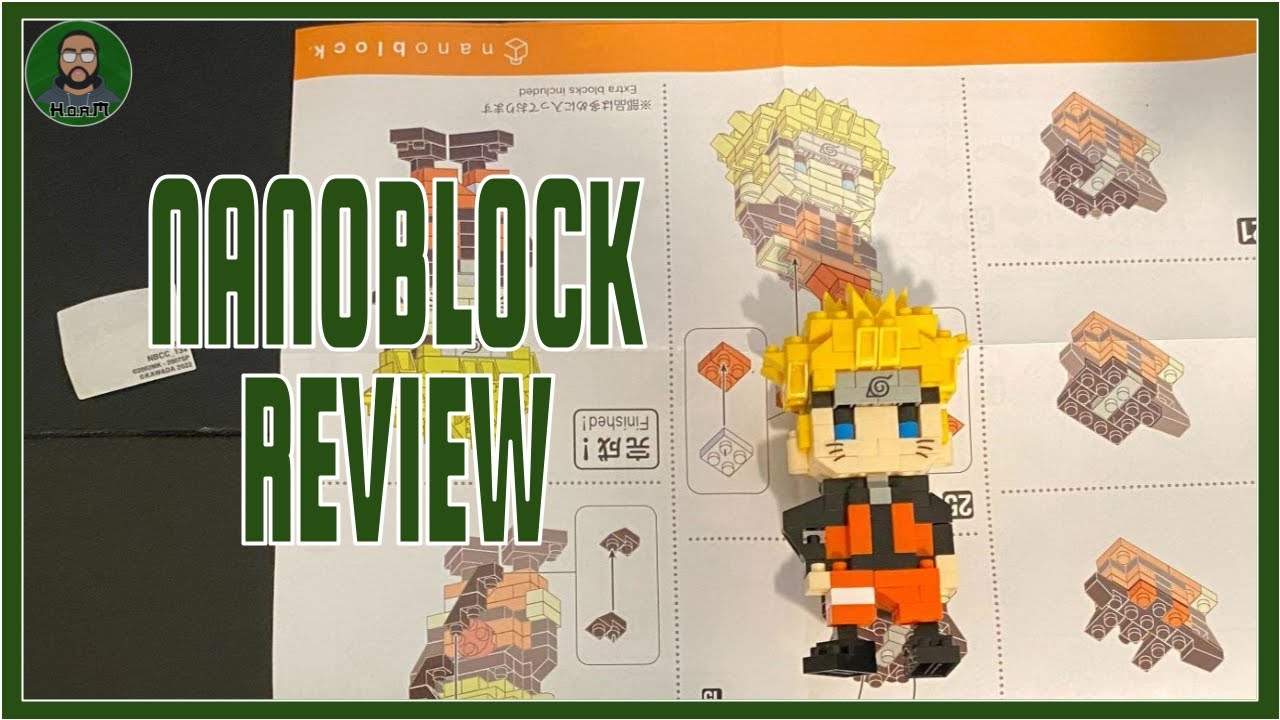
In HobbiesofaMan’s review, the creator says the small pieces were difficult to manipulate with larger fingers and that tweezers would have reduced the frustration. He also found several extra pieces and described the model as feeling fragile during assembly but solid after the remaining sections locked together.
The spoken review does not identify a model number. Those comments are useful as one builder’s handling experience, but they should not be used to assign a piece count, difficulty rating or specification to NBCC_134 or another particular model.
Video credit: HobbiesofaMan.
A long recorded assembly
The One for all, All for one video is more useful as a visual companion than as a build-time benchmark. The 71-minute recording includes extended conversation, pauses and a correction, so its total runtime should not be presented as the expected completion time.
At about 4:19, the builders identify 27 stages and begin with the head. The head is completed at roughly 50:07, and a mistake is noticed around 61:11 during the later assembly. Near 70:04, the figure initially appears reluctant to stand; by about 71:17, the builders determine that the soft mat is the problem and confirm that the figure stands on a flat surface.
Video credit: One for all, All for one.
A separate MiddleOfNoWhereCollector video shows a Naruto Uzumaki Nanoblock unboxing and build. It is best treated as a quick visual reference because the accessible caption does not establish the exact model number.
Naruto build troubleshooting
| Problem | Likely cause | Practical response |
|---|---|---|
| Peach, yellow or tan pieces are difficult to distinguish | The printed colors are close, or similar pieces were mixed together | Return to the inventory illustrations, compare pieces under neutral light and separate them into different compartments before continuing. |
| A piece seems to float without a clear reference point | The diagram is showing a new layer without an obvious visual anchor | Locate an outside corner or centerline, then count studs from that fixed point. Compare the exposed studs before pressing the layer down. |
| The partial model feels loose | Later overlapping layers may not yet be in place, or an earlier connection is misaligned | Do not add glue. Check the current and previous diagrams, seat the parts with even pressure, and allow the official sequence to add its intended reinforcement. |
| The finished figure will not stand | The surface may be soft or uneven, or the feet and lower layers may not be aligned | Test the model on a rigid, level surface before rebuilding anything. Then inspect the feet, legs and connection to the torso against the manual. |
| A late-stage section no longer matches the diagram | A piece may have shifted by one stud several stages earlier | Stop at the first visible mismatch. Work backward one layer at a time instead of forcing the new section into position. |
| A recessed piece is hard to remove | There is too little exposed surface for fingers | Use a purpose-designed Nanoblock removal tool or tweezers that grip the studs. Avoid metal tips that can gouge or launch the part. |
| Pieces remain after completion | They may be spares, or a required piece may have been omitted | Compare the finished model with the final diagram before assuming every leftover is extra. Store confirmed spares in a labeled bag with the model code. |
| A required piece appears missing | The part may be in a bag corner, under another color group or outside the workspace | Search the packaging and floor, recount the matching shapes, and document the model number and missing element before contacting the seller or regional distributor. |
For a U.S. support issue, Kawada directs North American Nanoblock inquiries to Bandai Namco Toys & Collectibles America. Keep the packaging, model number and proof of purchase available; they make it easier to show which regional product and part are involved. Current contact details are available on Kawada’s official contact page.
Display space and handling
These are compact figures, but their footprints vary more than their heights. The six 2024 Character Collection models range from 28 to 50 mm deep. The 2025 action group reaches 78 mm deep with Minato and 66 mm with Sasuke, so a narrow picture ledge that fits Sakura or Itachi may not accommodate every action pose.
Use the published width and depth rather than height alone when planning a case. Leave additional clearance around projecting hair, hands, weapons or jutsu effects so neighboring figures do not catch one another when a model is removed.
Move a finished figure by supporting the torso and lower structure together. Pulling it by an extended effect or a small decorative section places unnecessary leverage on connections designed for display rather than play.
If you want a wider anime collection after choosing a Naruto figure, the site’s Nanoblock anime set guide provides other character-based options. Compare official model codes before combining similarly scaled figures from different product lines.
Frequently asked questions
Is there only one Naruto Nanoblock set?
No. Kawada catalogs two Naruto Uzumaki Character Collection figures: NBCC_134 in the standard Naruto Shippuden outfit and NBCC_221 in Sage Mode with Rasenshuriken. Naruto also appears as one possible character in the NBMC_45 Mininano blind-box series.
Which Naruto Nanoblock is easier?
Kawada rates NBCC_134 at level two and NBCC_221 at level three. NBCC_134 also uses 180 pieces compared with 310 in NBCC_221, making it the more reasonable first choice for someone new to Nanoblock character figures.
Are all Naruto Nanoblock products blind boxes?
No. The individually numbered NBCC Character Collection kits identify the character on the package. NBMC_45 is the blind-packaged Mininano series.
Can I find official instructions online?
Yes. Kawada’s catalog page for each NBCC product links to its official assembly manual, and the NBMC_45 page provides separate instruction links for all six possible Mininano characters.
How long does a Naruto Nanoblock take to build?
There is not enough consistent evidence for a reliable average. One supplied build video lasts about 71 minutes, but it includes conversation, pauses, backtracking and a correction. Treat recorded builds as visual references, not promises of a standard completion time.
Are Naruto Nanoblock figures suitable for children?
Kawada lists a target age of 12 and older on the Japanese catalog pages. U.S. packaging or retailer age labels can differ, so follow the safety and age information printed on the specific package. These sets contain very small parts.
Which model should I buy first?
Choose a level-two 2024 figure if build approachability matters most. Choose the level-three 2025 version if an action pose matters more than piece count. For Naruto himself, that means NBCC_134 for a simpler standing figure or NBCC_221 for the more elaborate Sage Mode display.
Before buying or building, write down the exact model code. Match it to Kawada’s product page, open the corresponding manual, and prepare a bright, rigid workspace with separate trays for similar colors. Those three steps prevent most of the confusion caused by duplicate character names, tiny pieces and dense diagrams.
NanoblockUS.com is an independent fan and informational resource dedicated to Nanoblock builders in the United States and beyond. We are not affiliated with Kawada Co., Ltd., the manufacturer of Nanoblock.. Our team is made up of hobbyists, collectors, and detail-obsessed builders who want to help you get the most out of these remarkable micro building sets.