
Search for a Kirby nanoblock and you don’t get one product. You get at least thirteen Kawada releases spread across three different product lines, sold in the US under names that often don’t match the model numbers printed on the boxes. The single-figure Character Collection sets run from 160 to 280 pieces and stand roughly 1.3 to 2.8 inches tall. The blind-box mininano assortments are much smaller, around 80 to 90 pieces per figure, and you don’t choose which character you get. One larger diorama, NBH_230 Kirby Dream Land, uses 400 pieces and gives you Kirby on a Warp Star plus Whispy Woods on a shared base. If you want one recommendation before the details: NBCC_141 Kirby is the most sensible starting point, and Kirby Fire is the one worth saving for later.
In this guide:
- Every Kirby set and its official numbers
- Why the box name doesn’t match the model number
- Choosing between eight near-identical figures
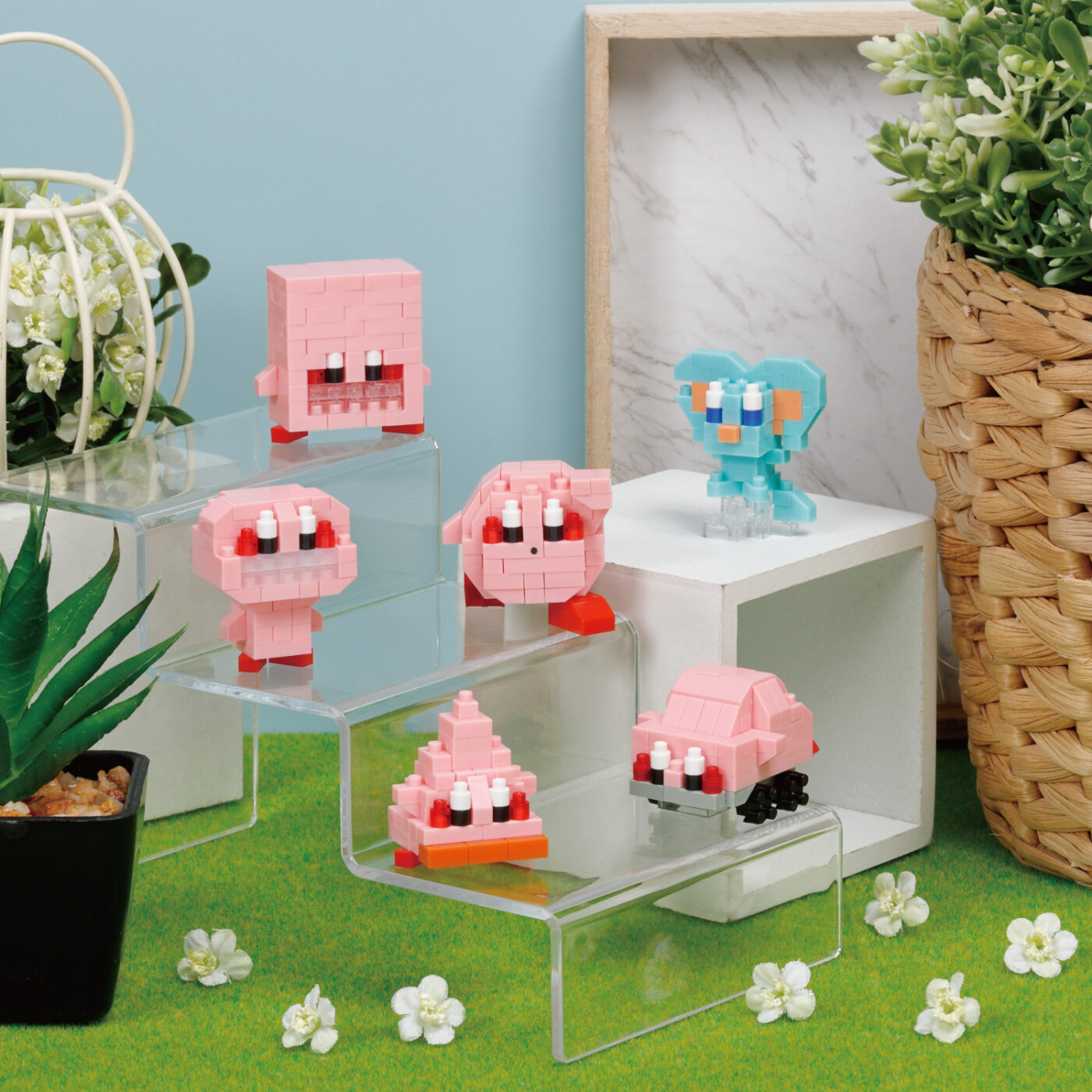
- The blind-box assortments
- Dream Land and the clear character set
- How hard these actually are
- Tools, surface and sorting
- Where Kirby builds go wrong
- Instructions and missing pieces
- Handling and displaying the finished model
- Buying in the US
- Questions readers keep asking
Every Kirby set and its official numbers
All figures below are drawn from Kawada’s own product catalog. Piece counts and finished sizes are the manufacturer’s, not ours. For the mininano assortments Kawada states the piece count and size for one reference character only, because the six figures in each assortment differ.
| Model | Name | Pieces | Finished size (W×H×D) | Released (Japan) |
|---|---|---|---|---|
| NBCC_140 | Kirby 30th | 220 | 47×70×50 mm (about 1.9×2.8×2.0 in) | Aug 6, 2022 |
| NBCC_141 | Kirby | 220 | 47×70×50 mm | Sep 16, 2023 |
| NBCC_160 | Kirby Clear Version | 220 | 47×70×50 mm | Sep 16, 2023 |
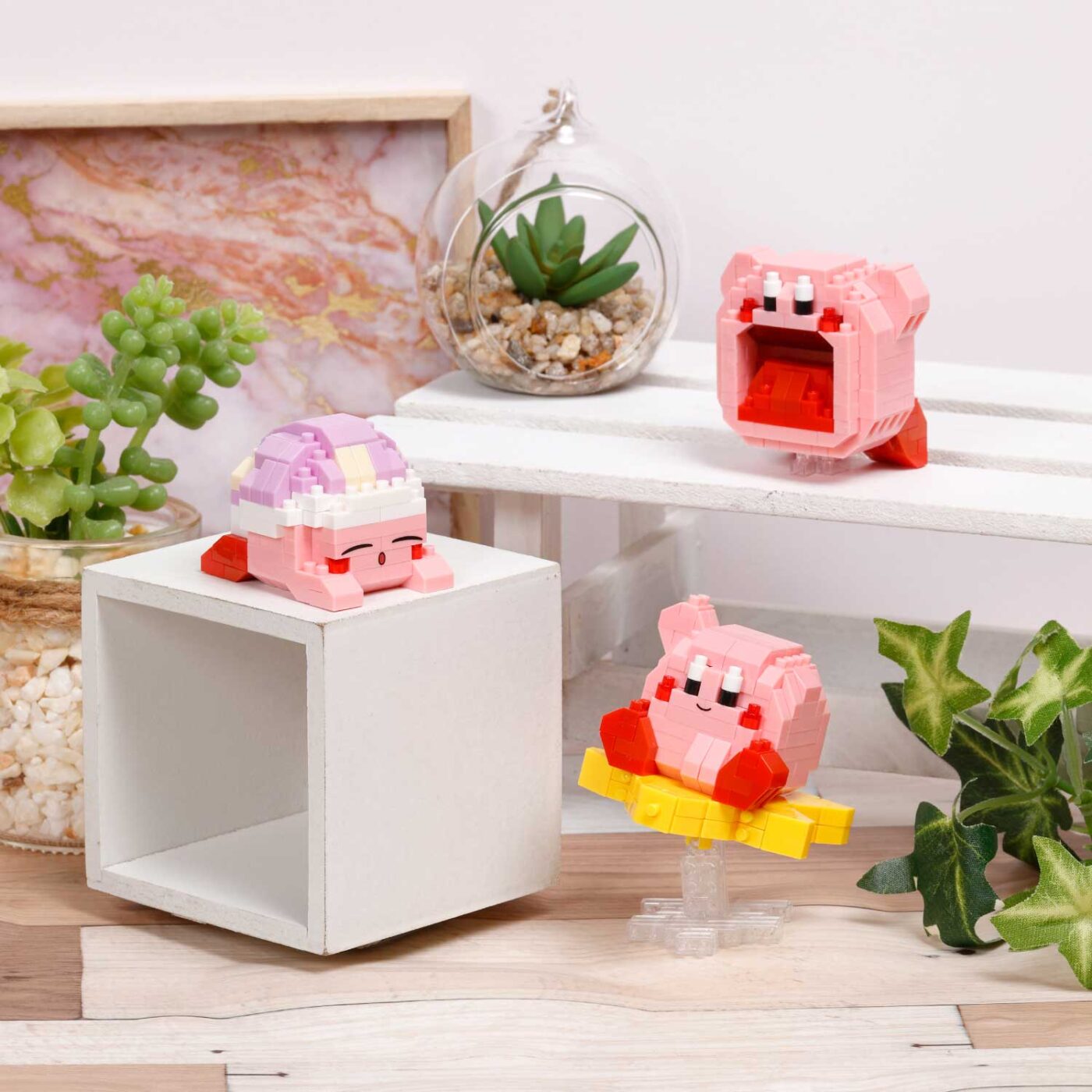
| NBCC_161 | Kirby Sleep | 160 | 32×33×44 mm (about 1.3×1.3×1.7 in) | Sep 16, 2023 |
| NBCC_162 | Kirby Inhale | 200 | 48×46×32 mm (about 1.9×1.8×1.3 in) | Sep 16, 2023 |
| NBCC_199 | Kirby Ice | 240 | 44×63×42 mm (about 1.7×2.5×1.7 in) | Nov 30, 2024 |
| NBCC_200 | Kirby Fire | 280 | 48×68×42 mm (about 1.9×2.7×1.7 in) | Nov 30, 2024 |
| NBCC_201 | Kirby Sword | 210 | 72×42×44 mm (about 2.8×1.7×1.7 in) | Nov 30, 2024 |
| NBH_230 | Kirby Dream Land | 400 | 120×84×80 mm (about 4.7×3.3×3.1 in) | Aug 6, 2022 |
| NBM-042 | Dream Land Character Set, Clear Version | 650 | 120×84×80 mm | Aug 2023 |
| NBMC_29 | mininano Kirby | 80 (Kirby, reference) | 36×30×20 mm (Kirby, reference) | Sep 25, 2021 |
| NBMC_46 | mininano Kirby vol. 2 | 90 (Friend Heart, reference) | 28×42×13 mm (reference) | Aug 6, 2022 |
| NBMC_60 | mininano Kirby and the Forgotten Land | 80 (Kirby, reference) | 35×30×30 mm (reference) | Sep 16, 2023 |
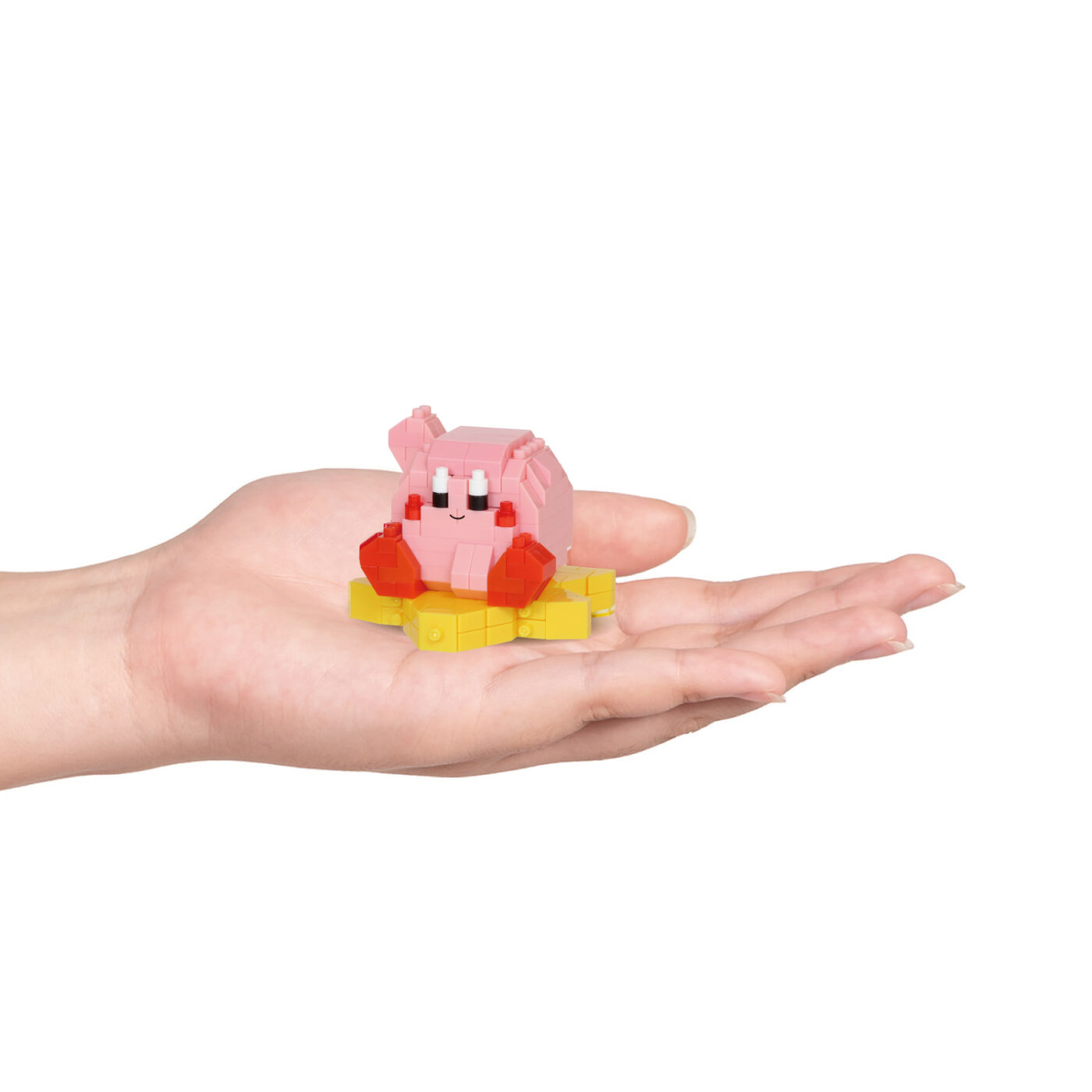
Kawada’s target age for every set on this list is 12 and up in Japan. US listings sometimes show 8+ and sometimes 15+ for the same product, which is a retailer labeling difference rather than a change to the kit.
Why the box name doesn’t match the model number
This is the most common source of confusion, and it costs people money when they buy a duplicate. US retail titles are translated and reworded, so the same figure appears under several names. NBCC_141 is sold simply as “Kirby” but also turns up as “Kirby Star.” NBCC_161 is “Kirby Sleep” in Kawada’s catalog and “Sleeping Kirby” on Amazon. NBCC_162 is “Kirby Inhale” officially and “Inhaling Kirby” at US retail. The Forgotten Land assortment is NBMC_60 in Japan, where the game is called Kirby: Discovery, so Japanese listings say “mininano Kirby Discovery” for the exact same blind box.
Two overlaps matter more than the rest.
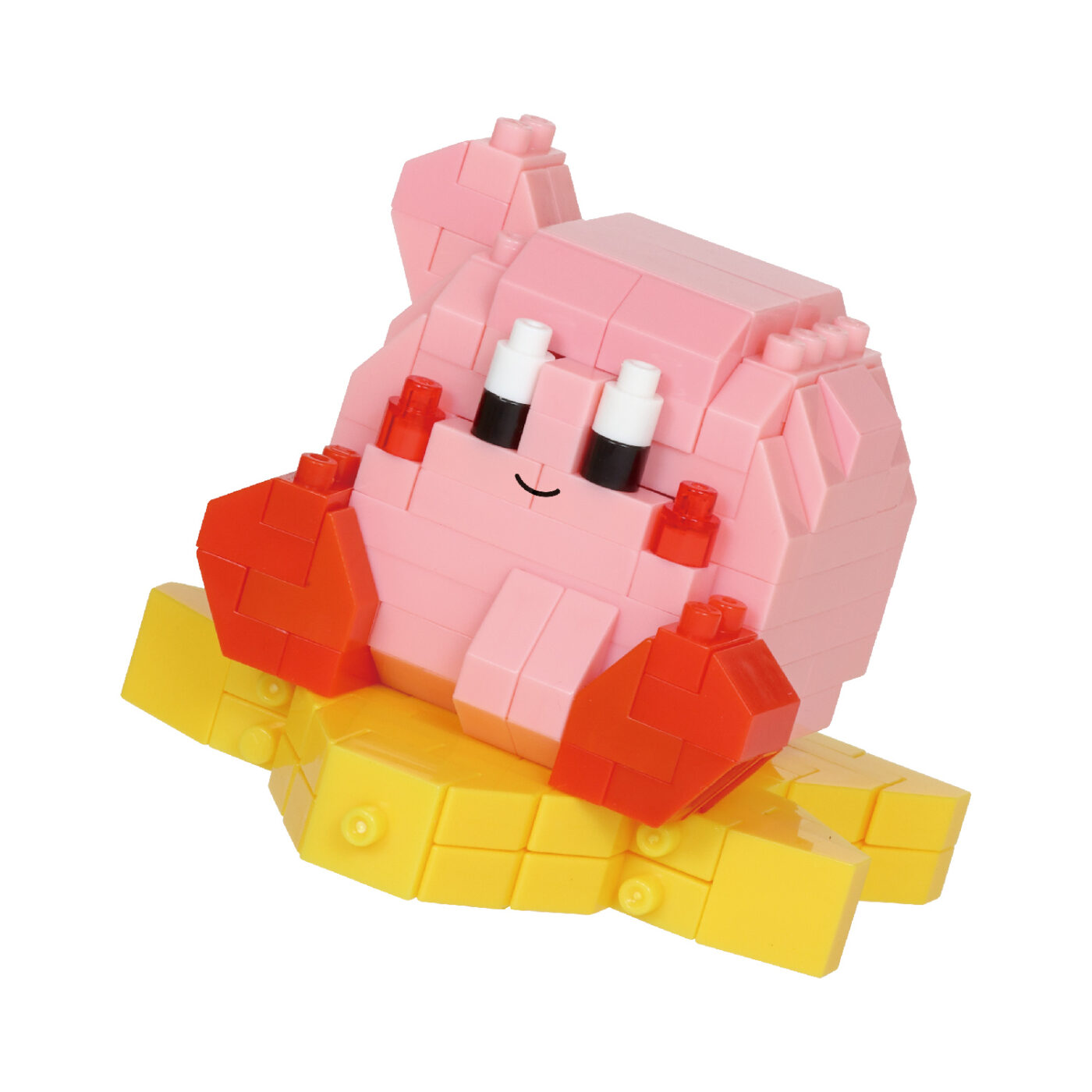
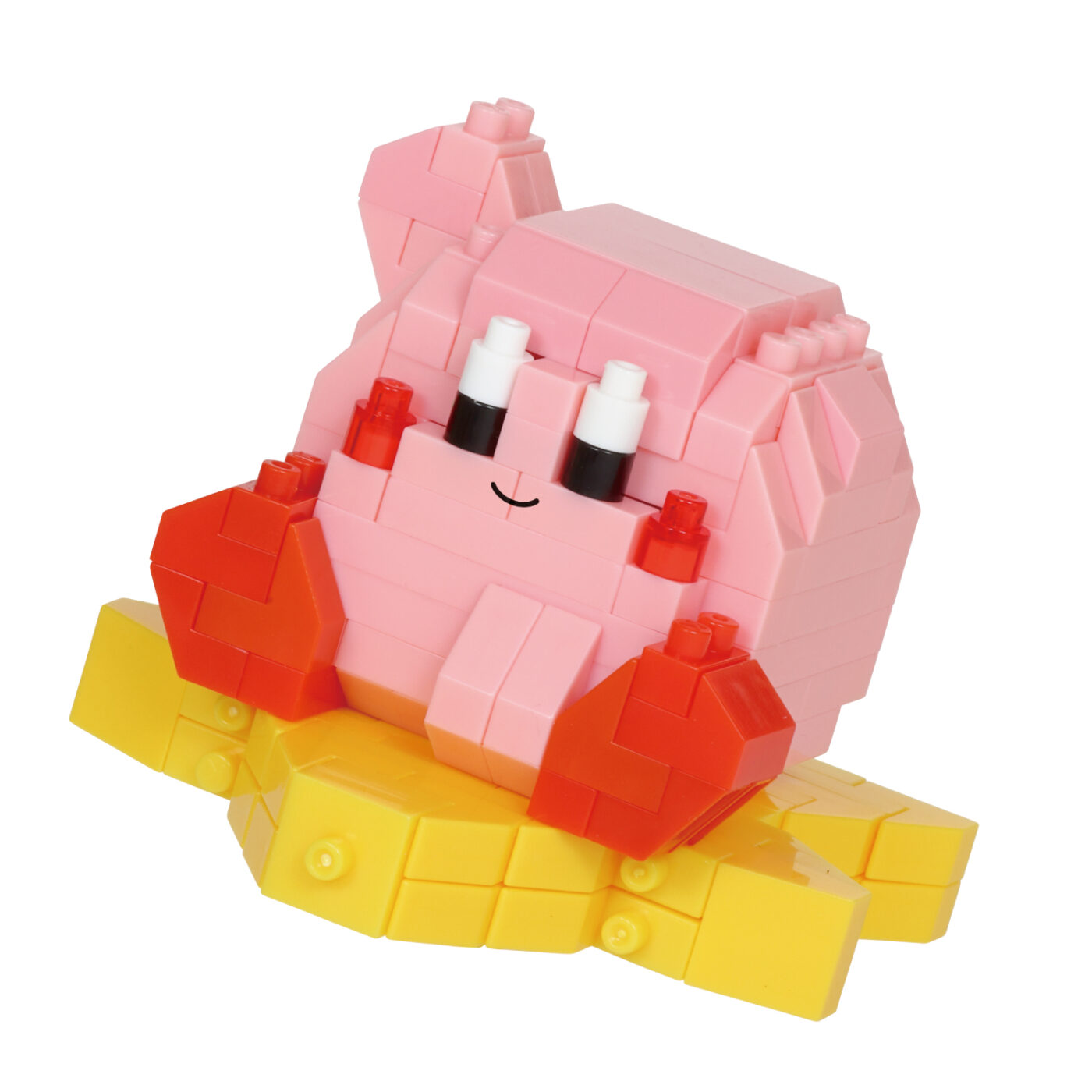
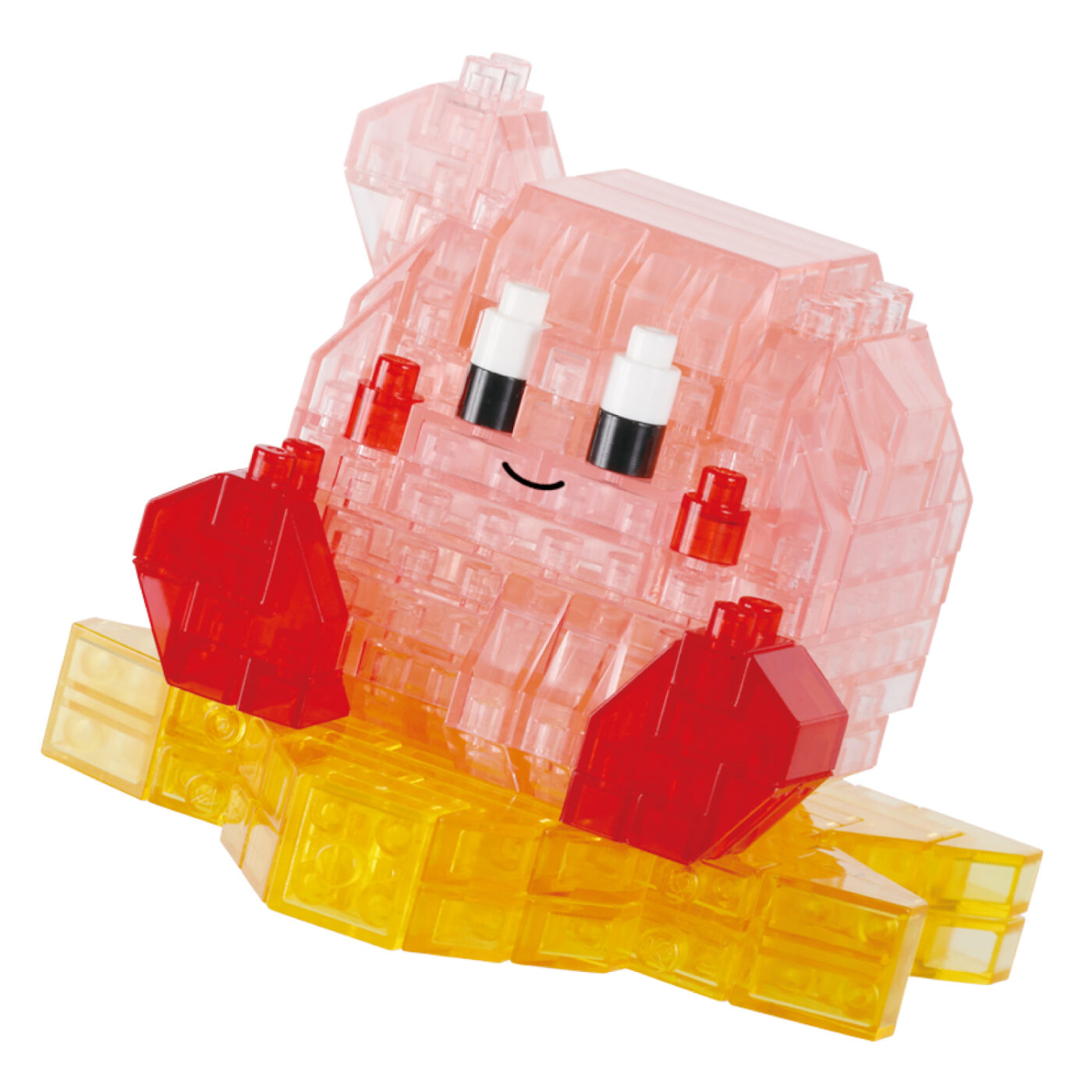
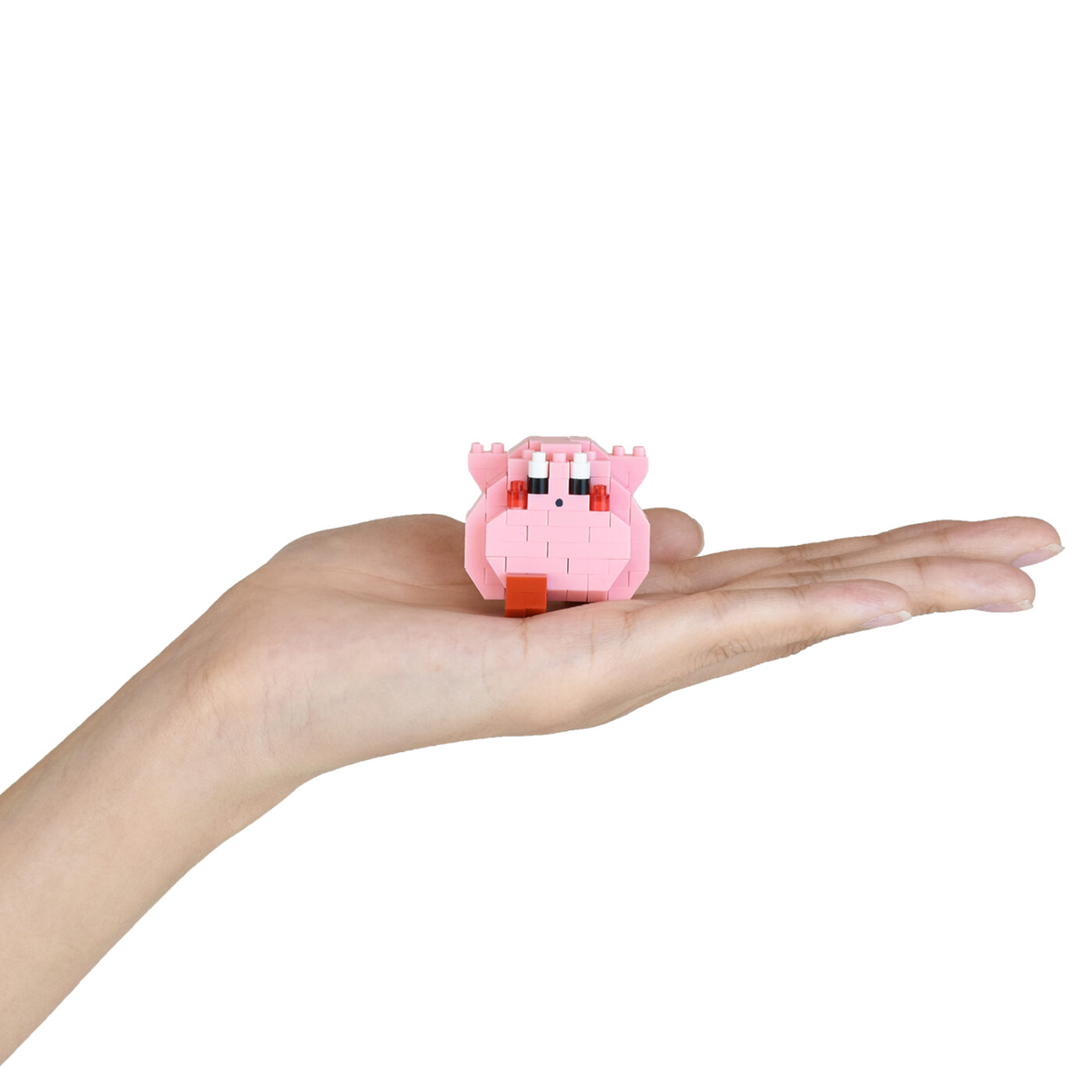
NBCC_140 and NBCC_141 are the same model. Kawada’s own entry for NBCC_141 states it uses the same shape as the 2022 NBCC_140 Kirby 30th, minus the 30th anniversary logo sticker that went on the earlier version’s back. If you already own one, the other adds a sticker and nothing else. NBCC_160 is that same 220-piece Kirby again, rebuilt in clear bricks — a genuinely different-looking model on the shelf, but not a different build. Lined up, the point makes itself:
The other trap isn’t a building set at all. NFG-05 Kirby Warp Star belongs to Kawada’s n-fig line, and Kawada describes it as a pre-assembled block-motif figure with a detachable keychain that requires no assembly. Its studs use the nanoblock standard, so you can customize it with loose pieces, but if you’re expecting a kit to build, this isn’t one.
Choosing between eight near-identical figures
The eight NBCC single-figure sets cost roughly the same in Japan — ¥1,760 each at the listed retail price — and land within about 120 pieces of each other. Price and size won’t separate them for you. Pose, printed detail and the shape of the hard part will.
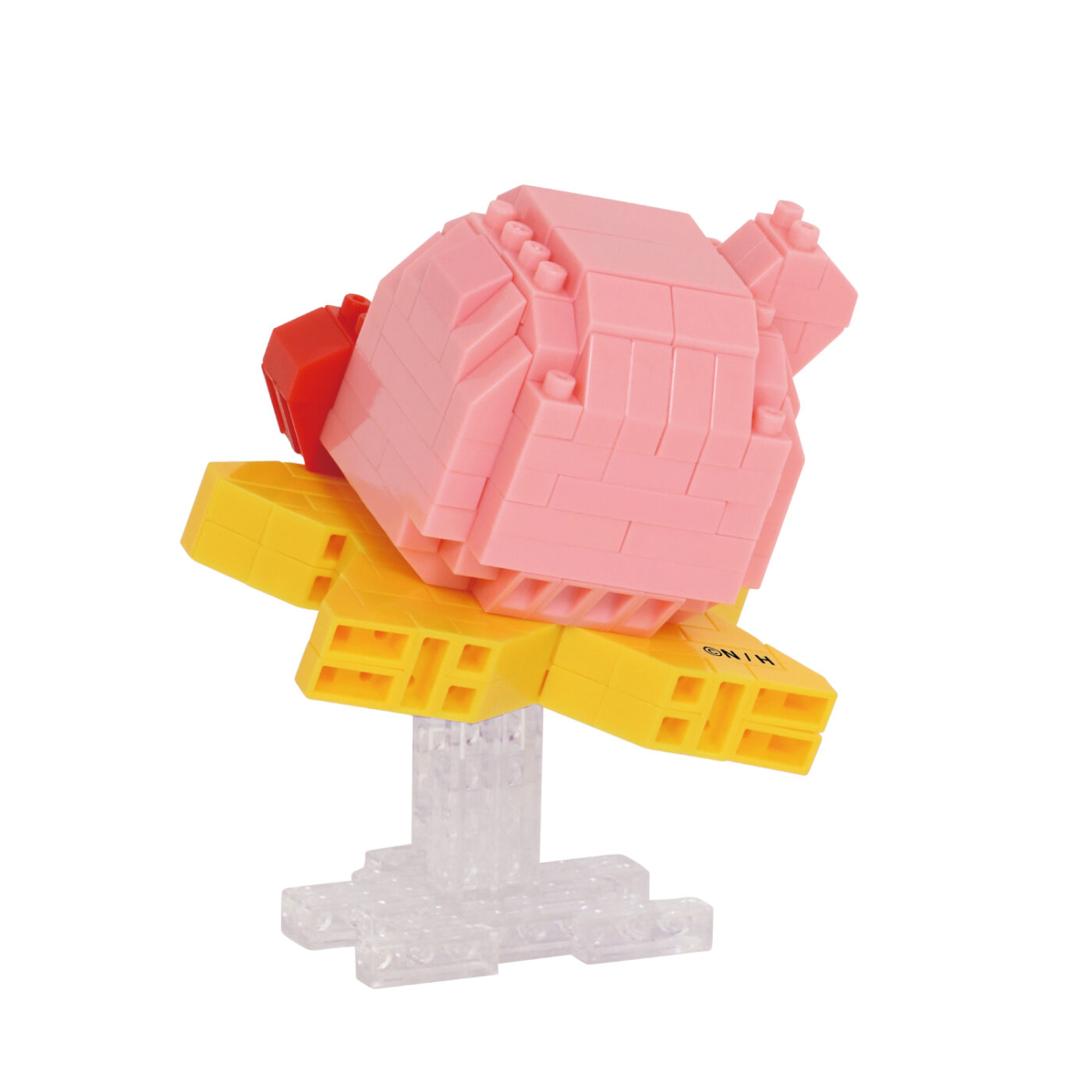
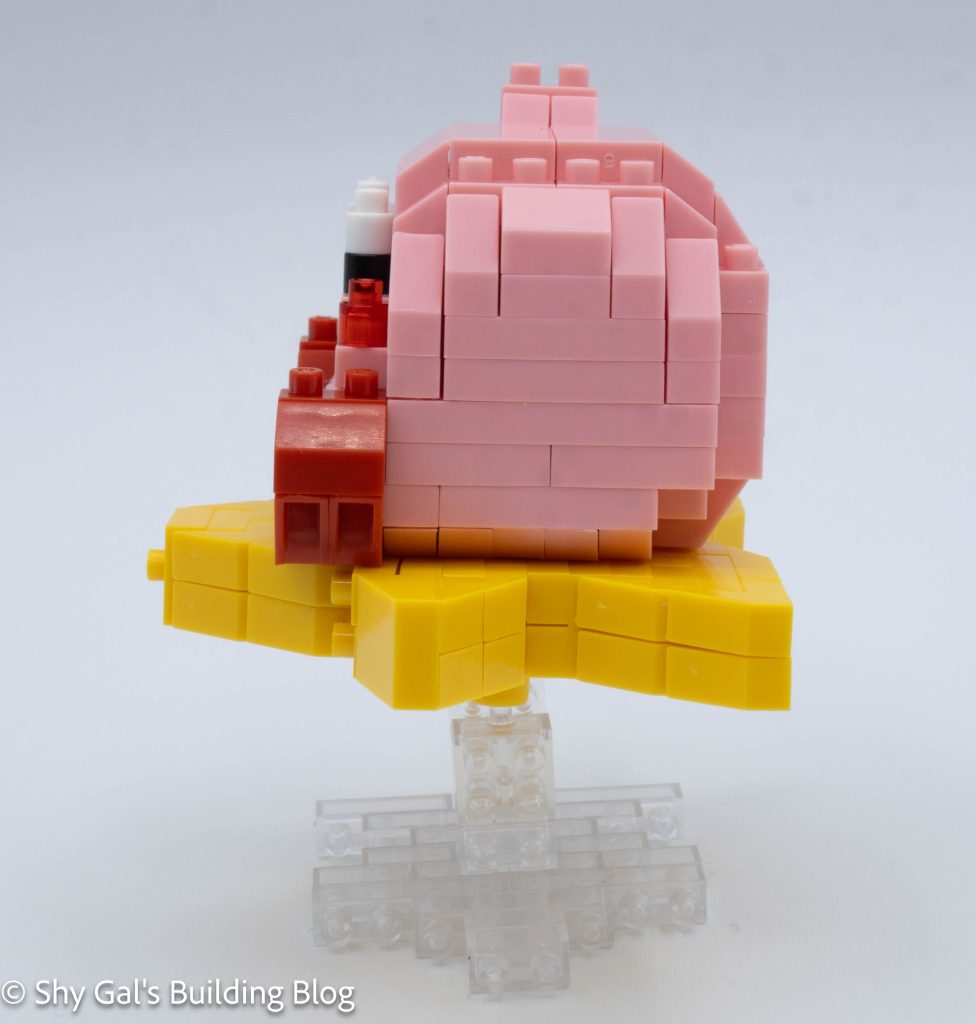
Start with NBCC_141 Kirby. It’s the standing-on-a-Warp-Star pose most people picture, the mouth is a custom printed brick rather than a sticker, and Kawada notes the included clear blocks let you display Kirby as though he’s hovering on the Star. Shy Gal’s Building Blog, an independent builder who has documented most of the Kirby line, rates it 2/5 and calls Kirby himself and the stand straightforward, with the Warp Star’s final step being the one place the assembly order actually matters. That’s a good profile for a first micro-brick build: mostly forgiving, with one section that teaches you to read ahead.
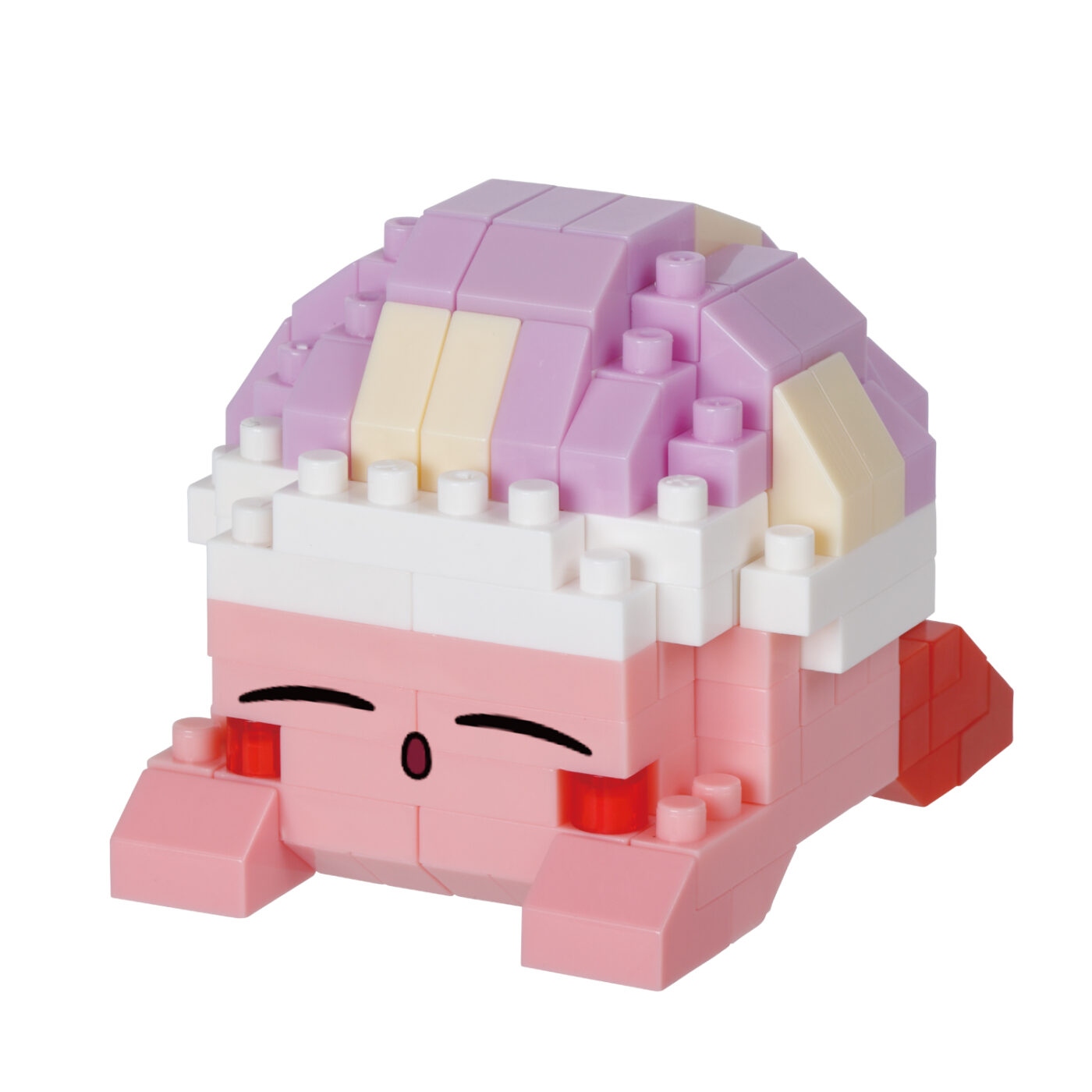
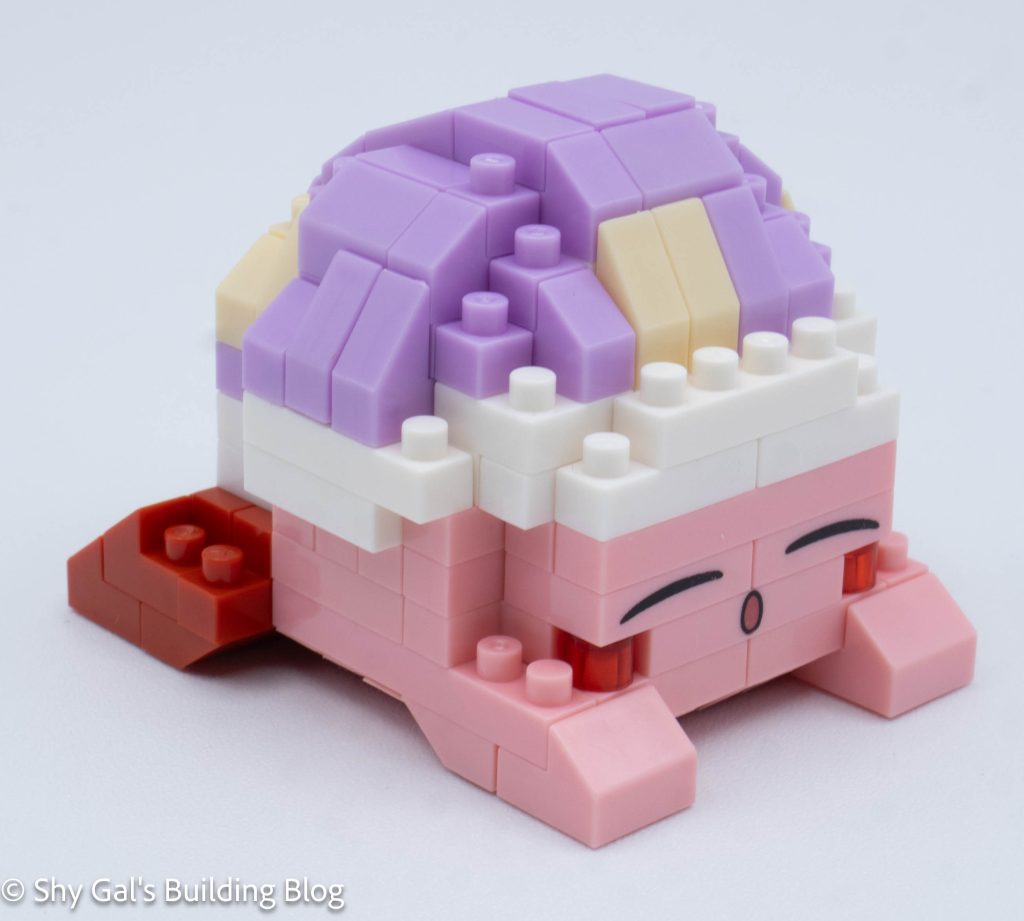
Pick NBCC_161 Kirby Sleep if the count intimidates you. At 160 pieces it’s the smallest single-figure set, and it sits low rather than perching on a stand, so it needs almost no shelf depth. The trade-off, per Shy Gal’s review, is that the hat leans heavily on slope pieces where the required size changes almost brick to brick, and the instructions for the feet weren’t clear. Fewer pieces here doesn’t mean fewer decisions.
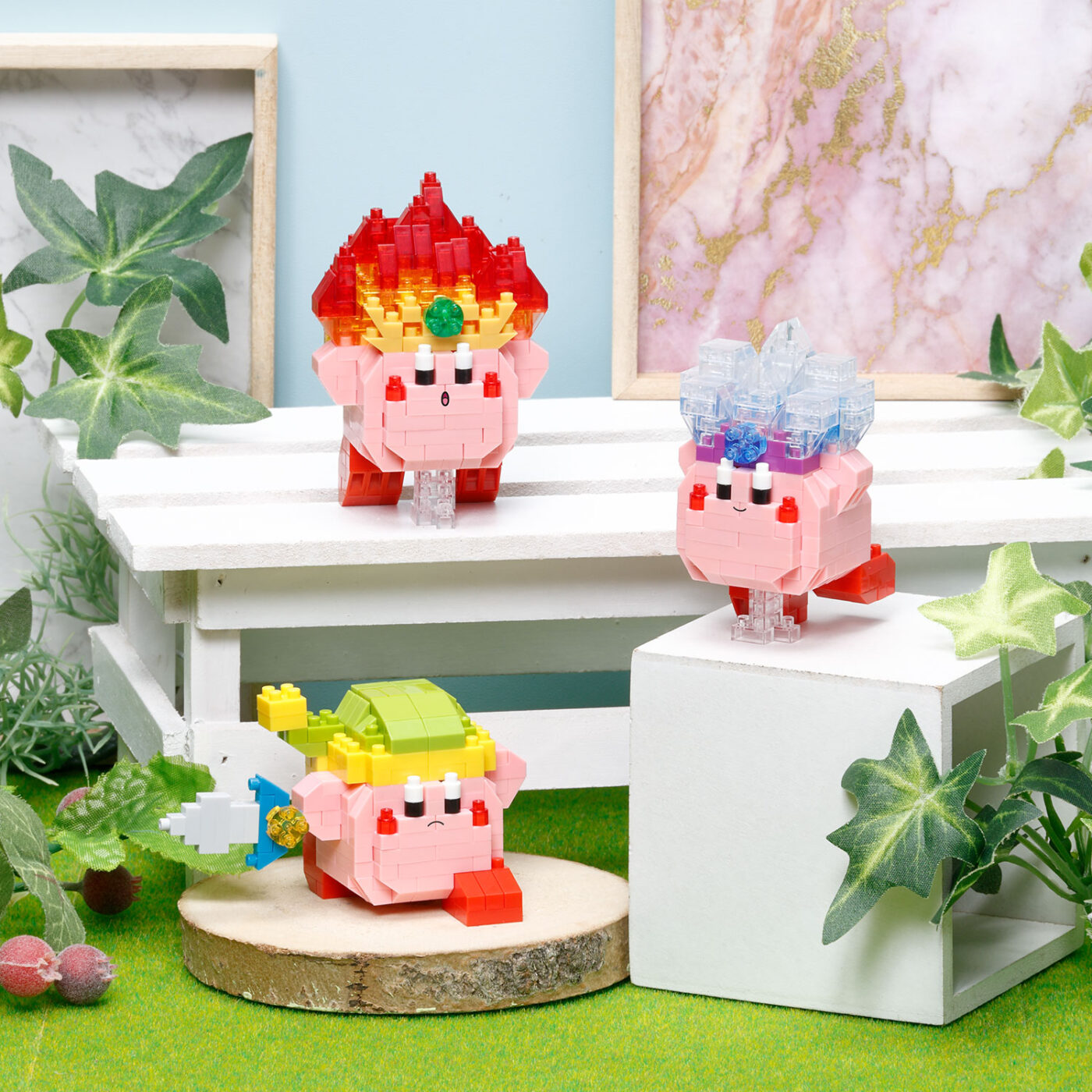
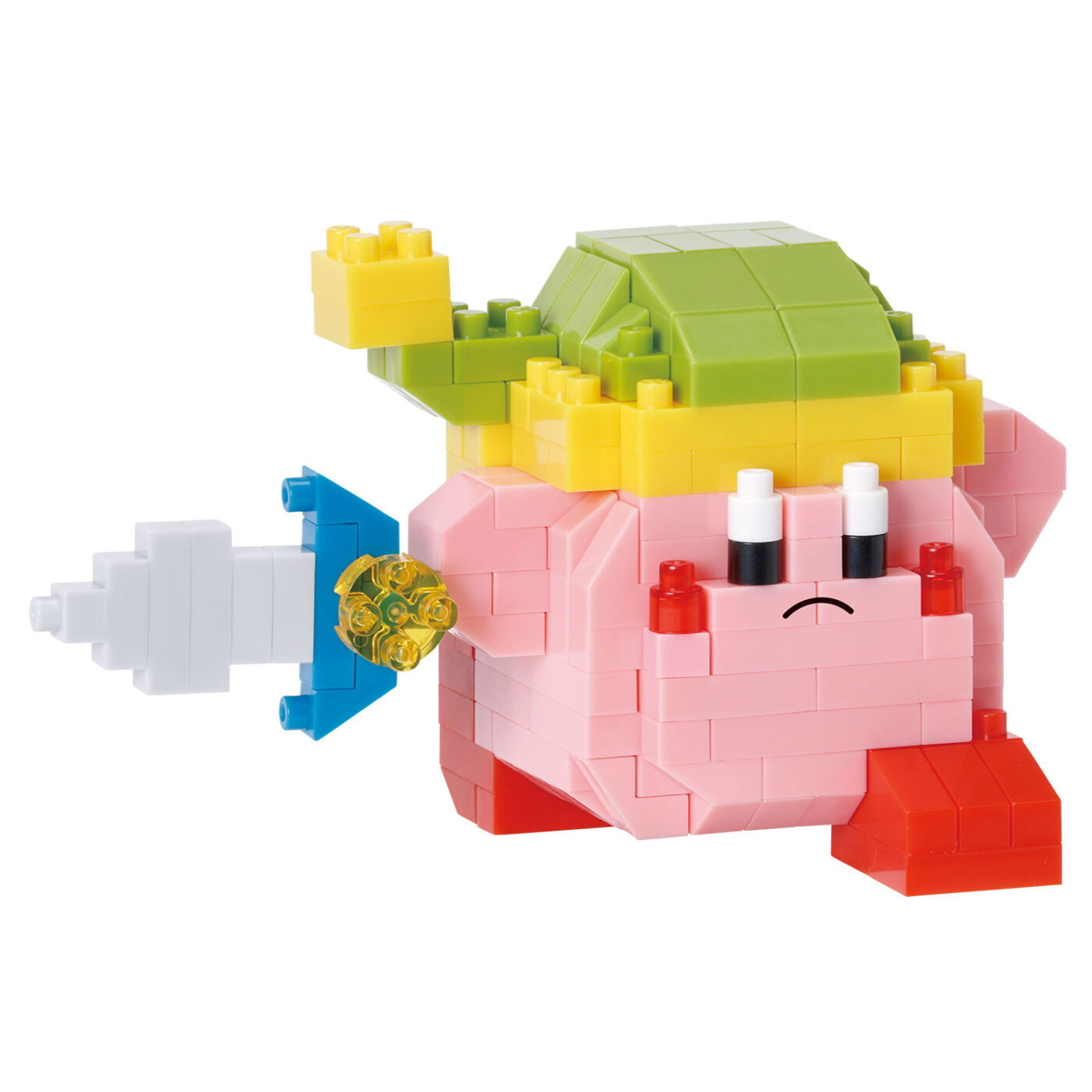
Choose NBCC_201 Kirby Sword for a dynamic silhouette. Kawada describes the hat as flipped up to suggest motion, and it’s the widest of the group at 72 mm — the only one that reads as an action pose from across a room. Because the legs are mid-stride, Shy Gal notes they aren’t identical, which is worth knowing before you assume you can build one and mirror it.
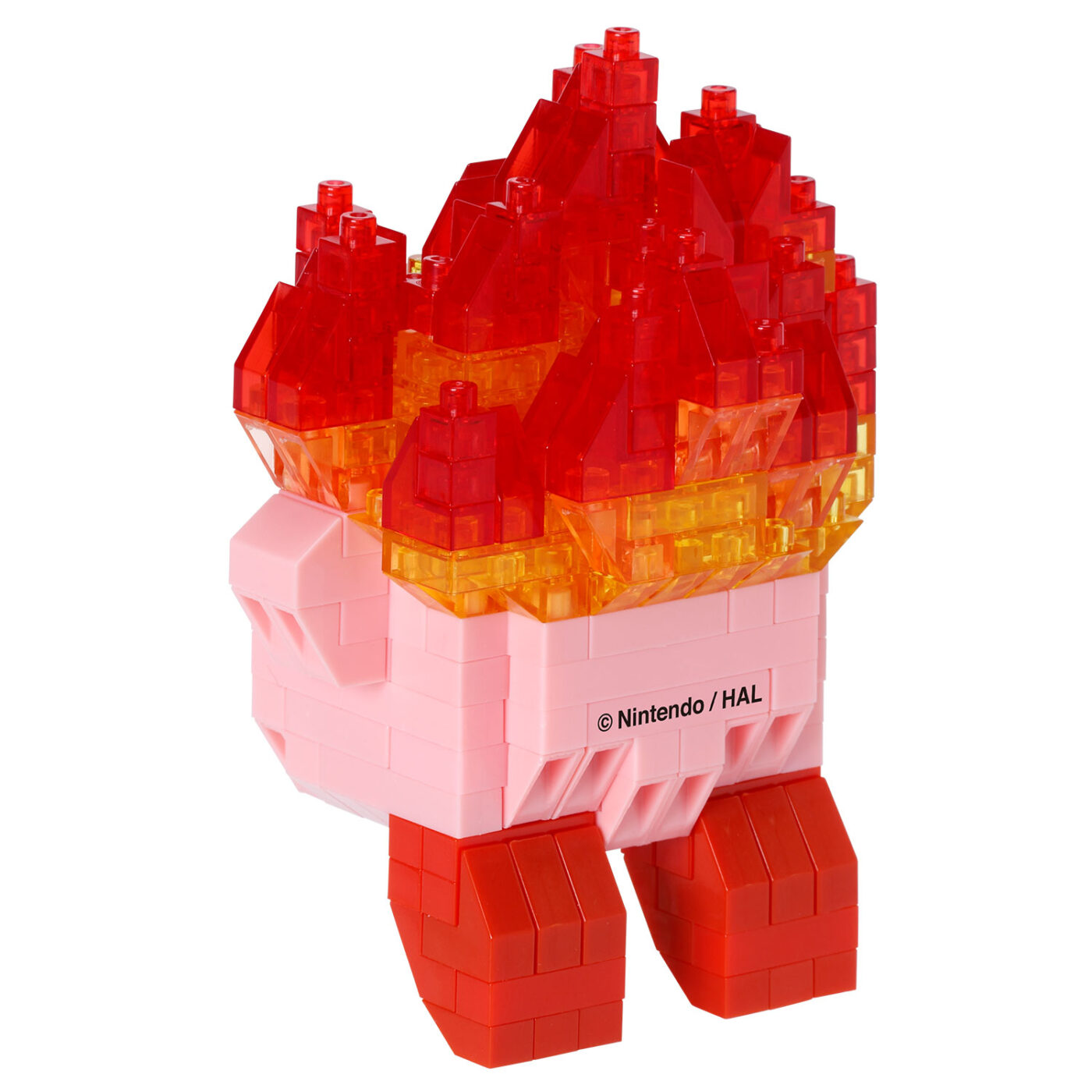
NBCC_199 Kirby Ice and NBCC_200 Kirby Fire are the transparent-brick showpieces. Kawada says the ice crown mixes two colors of clear parts and the fire crown combines three. Both look better in person than in listing photos, and both concentrate their difficulty in that crown. Shy Gal found the fire crown surprisingly tricky, with many bricks added per step and 1×1 placements that were hard to pin down, and wished the instructions had been broken into more steps. If you have built nanoblock before, Fire is the more interesting build of the two. If you haven’t, it’s the wrong first purchase.
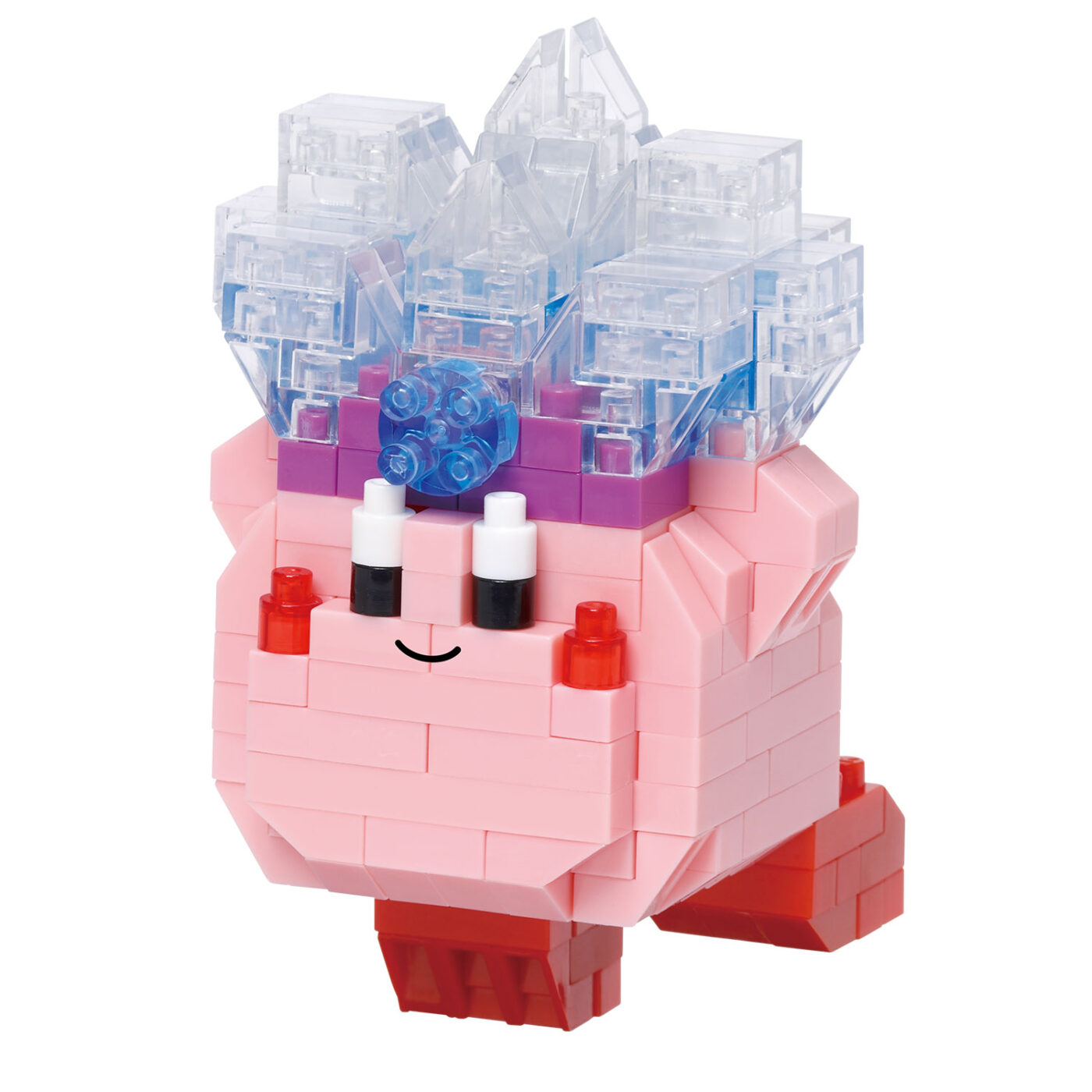
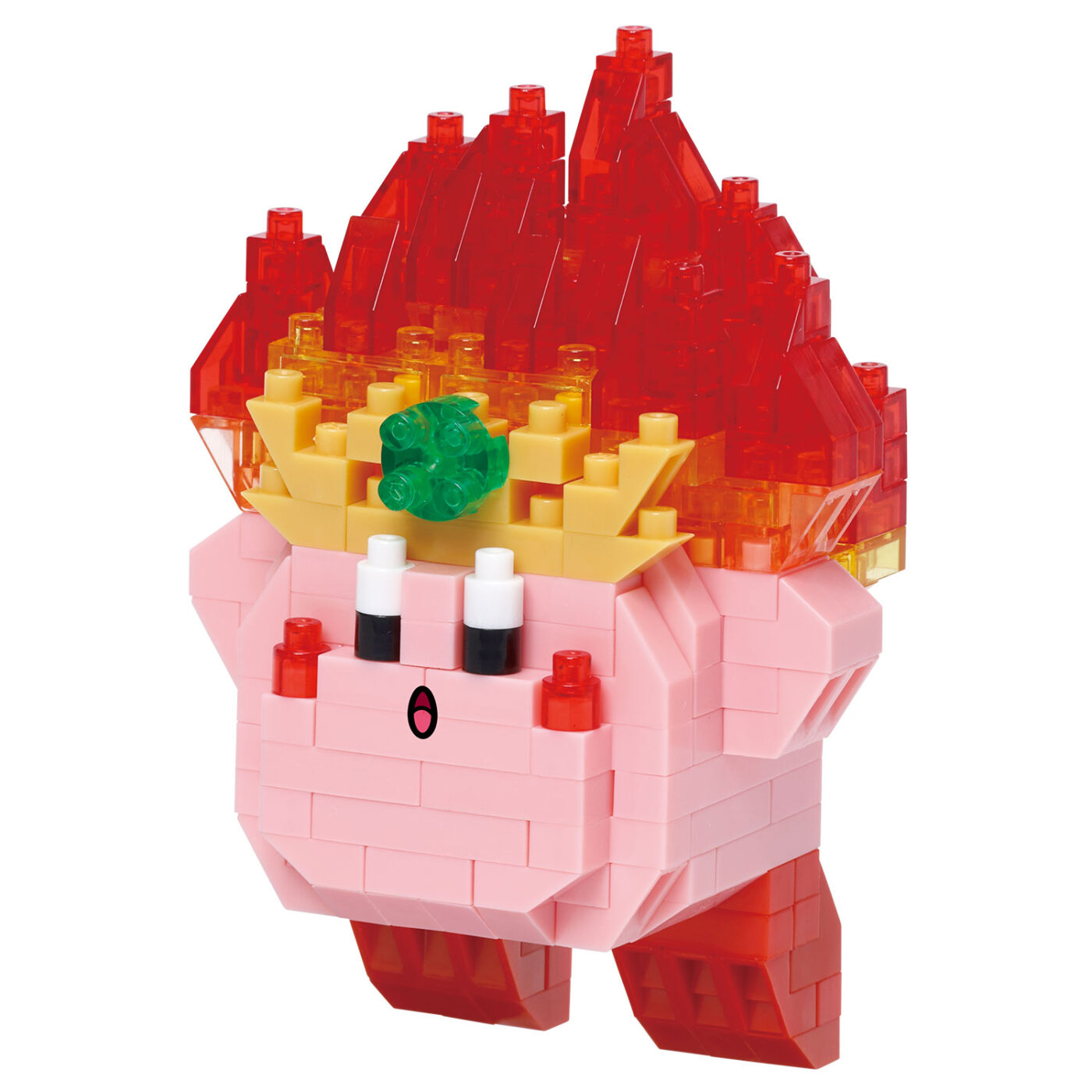
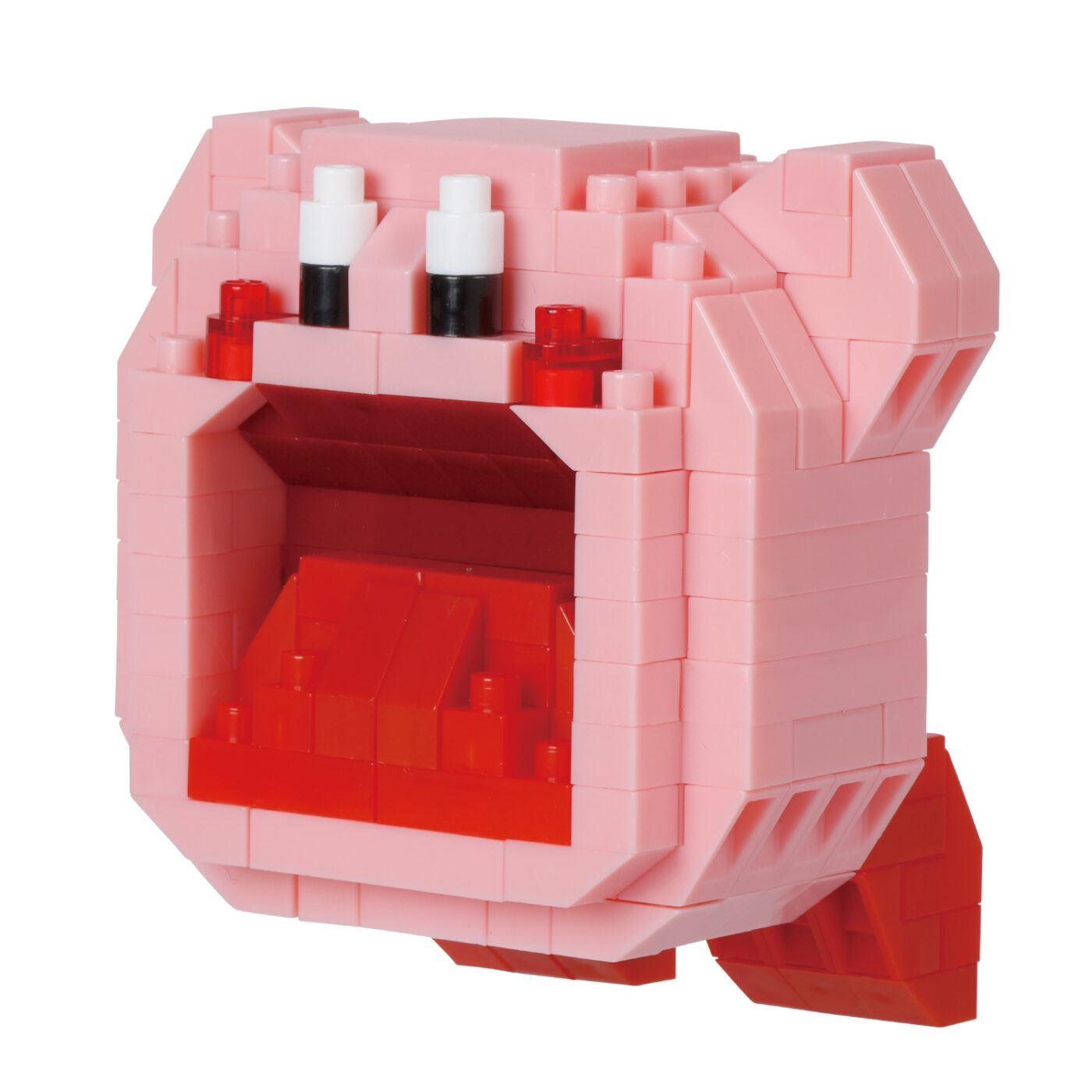
NBCC_162 Kirby Inhale is the odd one out in a good way. Kawada notes the inside of the wide-open mouth is modeled in three dimensions rather than faked with a flat printed piece. It’s the set that looks least like a generic pink sphere.
Skip NBCC_140 if you own NBCC_141, and treat NBCC_160 as a display variant rather than a second project. Collectors chasing the complete line obviously want all three. Everyone else is buying the same 220 pieces a second time.
The blind-box assortments
The mininano line works differently and trips people up. Each package is blind — you don’t know which of the six characters is inside until you open it. Kawada sells them individually and as a box of six, and states that buying the full box completes the assortment. Buying singles and hoping to complete a set is a lottery.
Three Kirby assortments exist, and their lineups don’t overlap.
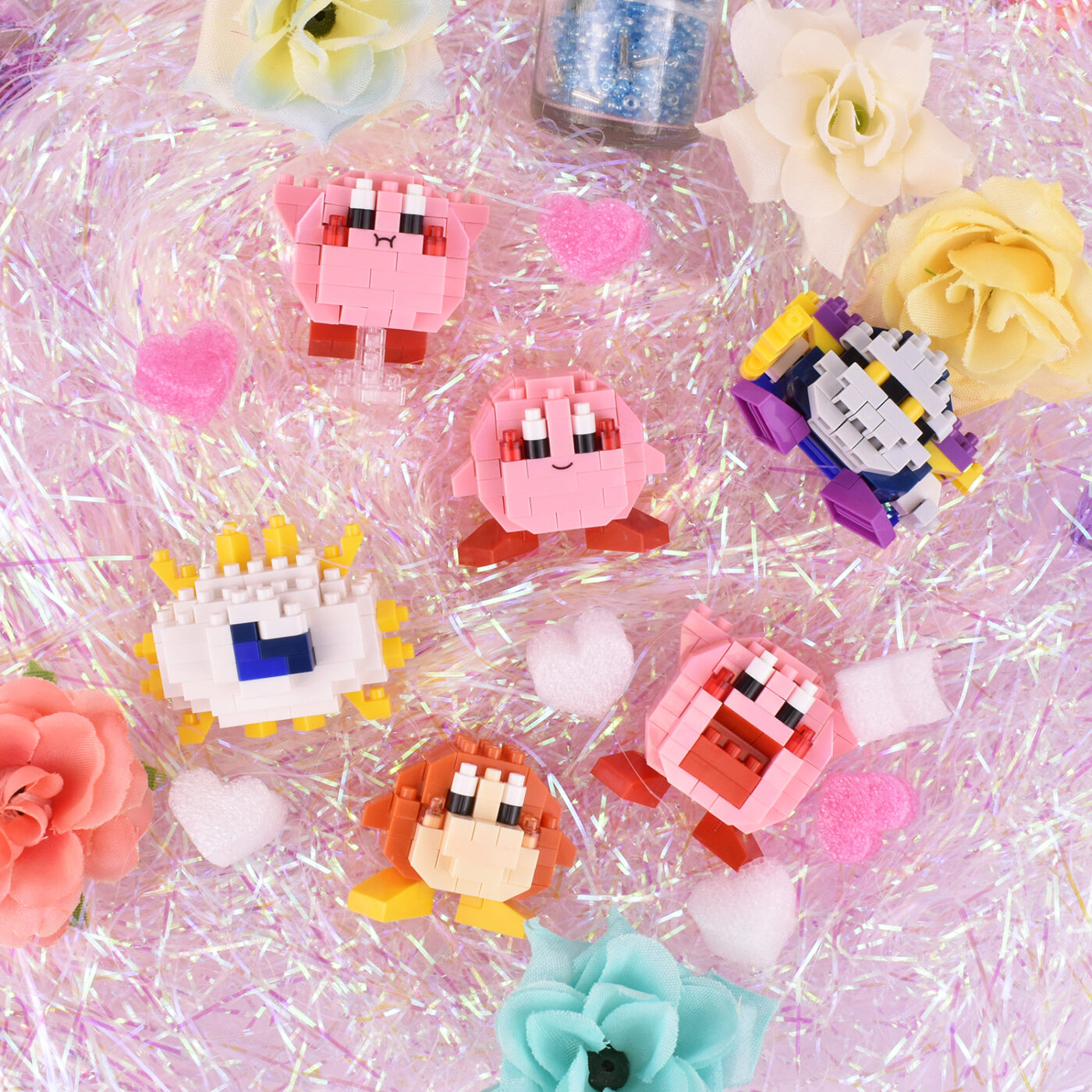
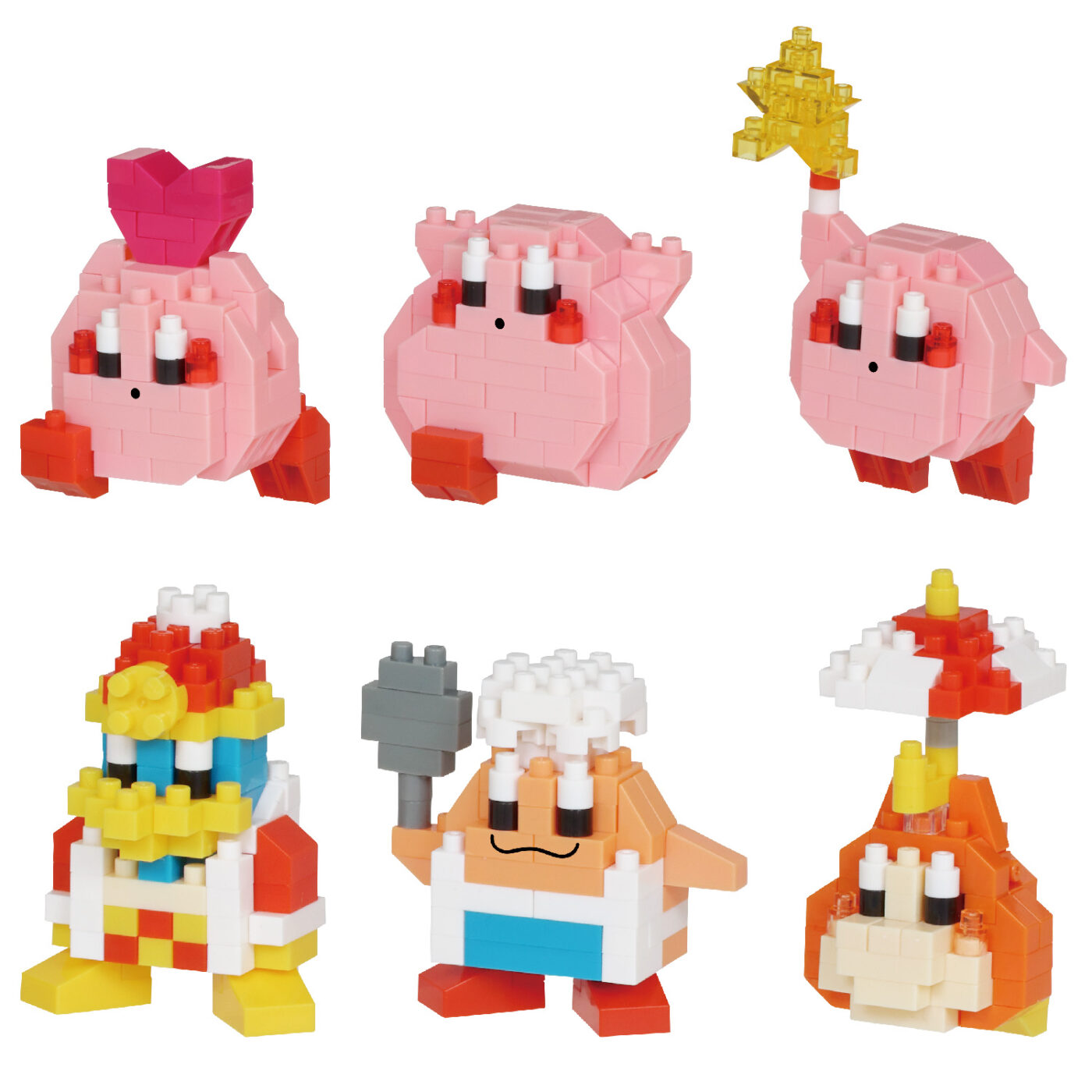
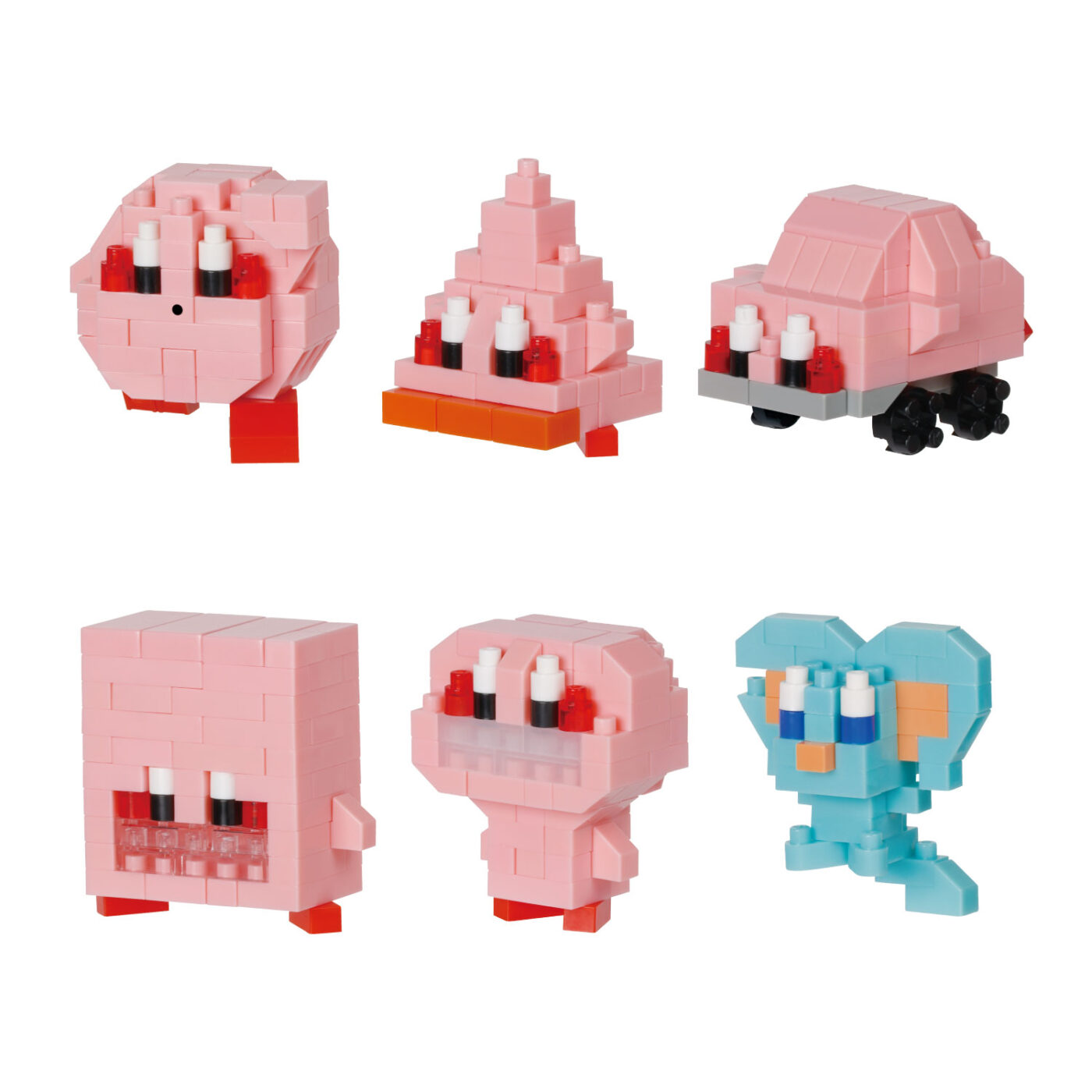
At these piece counts the mininano line is the cheapest way in, and Kawada explicitly designs the figures to be displayed alongside the larger Dream Land diorama. They are not, however, the easiest builds. Smaller figures mean less structure to hold onto and more reliance on very small parts, which is exactly what the video further down shows.
Dream Land and the clear character set
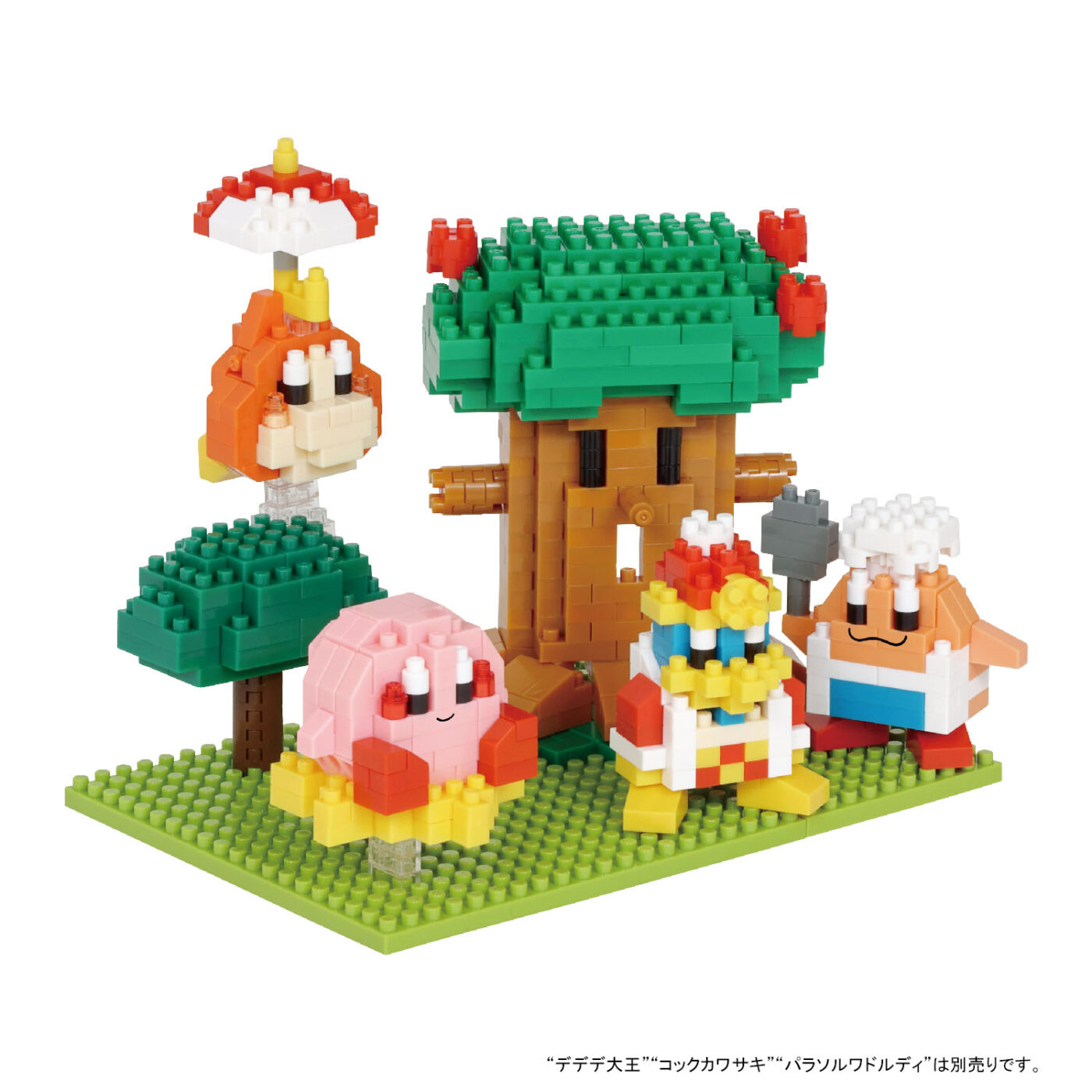
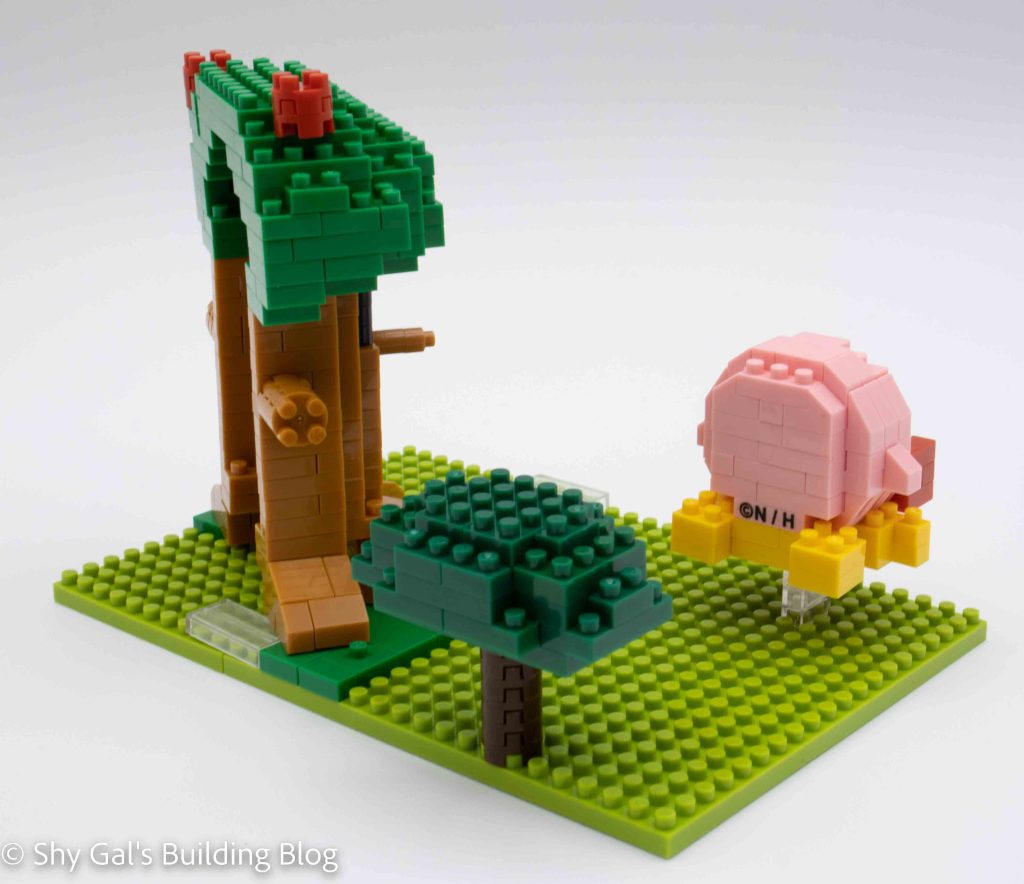
NBH_230 Kirby Dream Land is the set to buy if you want a scene rather than a figure. Kawada lists 400 pieces and a finished footprint of 120×84×80 mm, with Kirby on a Warp Star and Whispy Woods sharing one base.
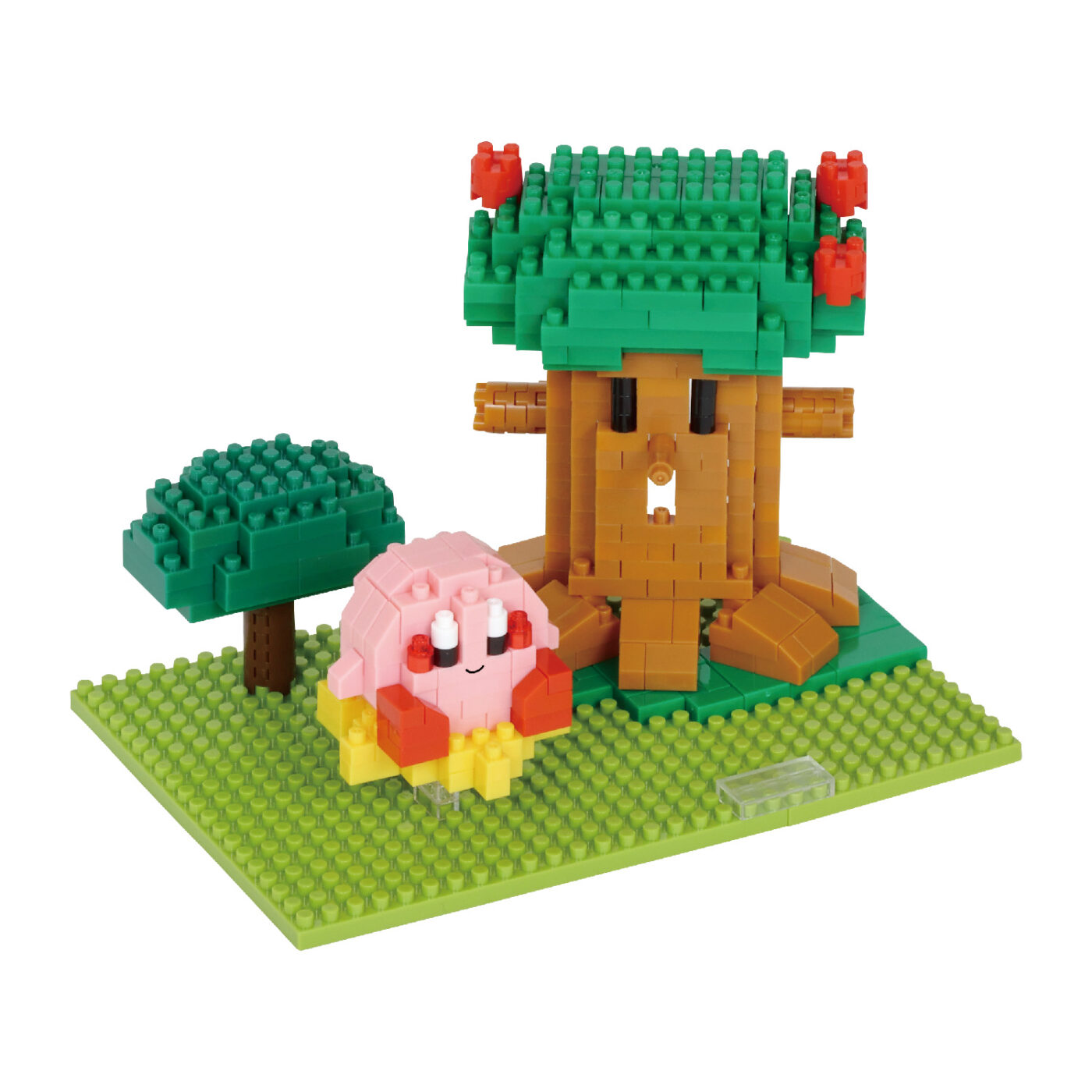
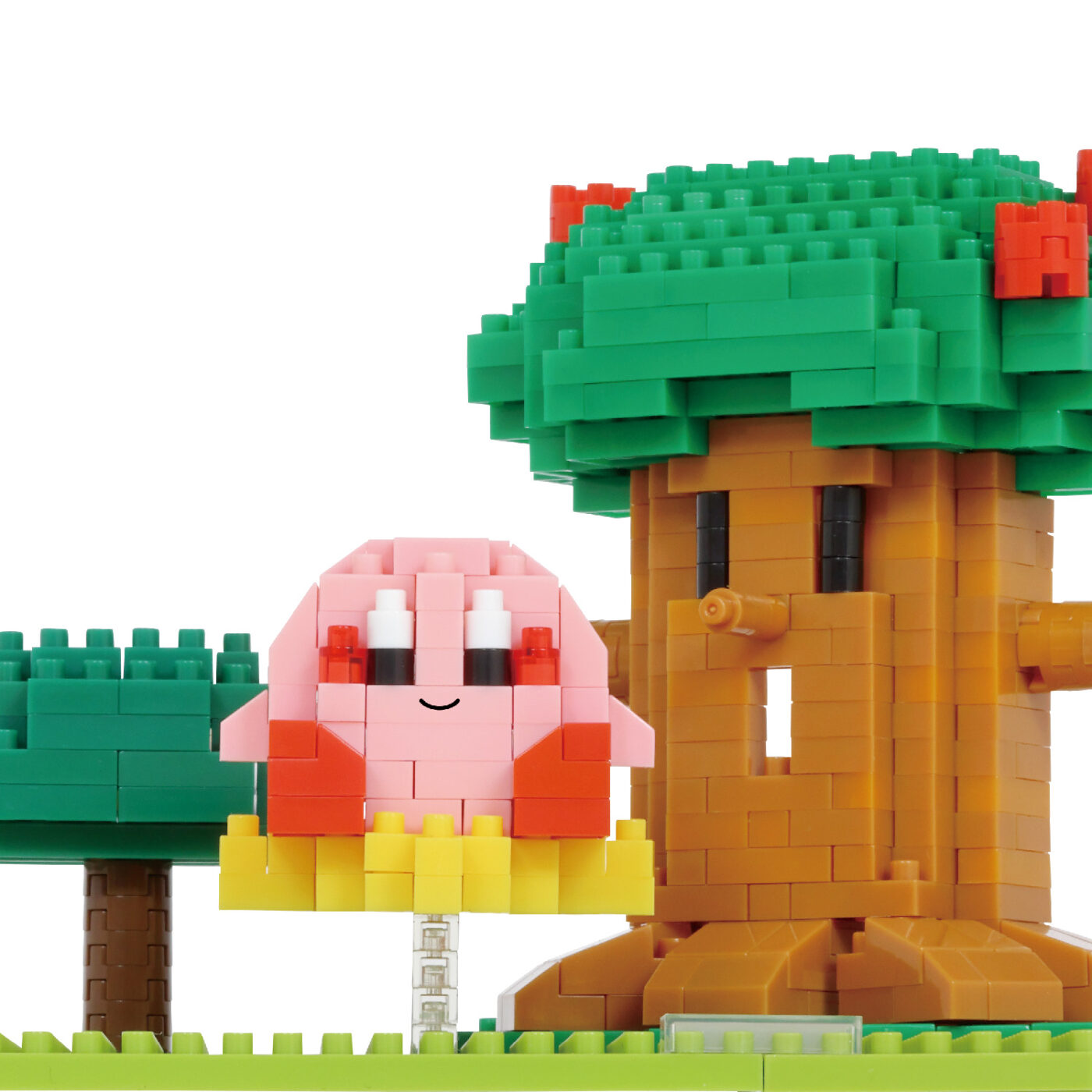
Shy Gal rates it 3/5 — the highest of any Kirby set reviewed — and the reasons are structural rather than fiddly: Whispy Woods’ leaves involve overhanging bricks that can collapse if pushed too hard, and the build uses two similar shades of green, one per tree, that are genuinely hard to tell apart in poor lighting. Both are visible in the close-up below, where the darker canopy and the lighter background tree sit next to each other.
Kawada also positions the base as something to build on, suggesting separately sold mininano figures be added to extend the scene. That is worth knowing before you decide how much shelf to clear.
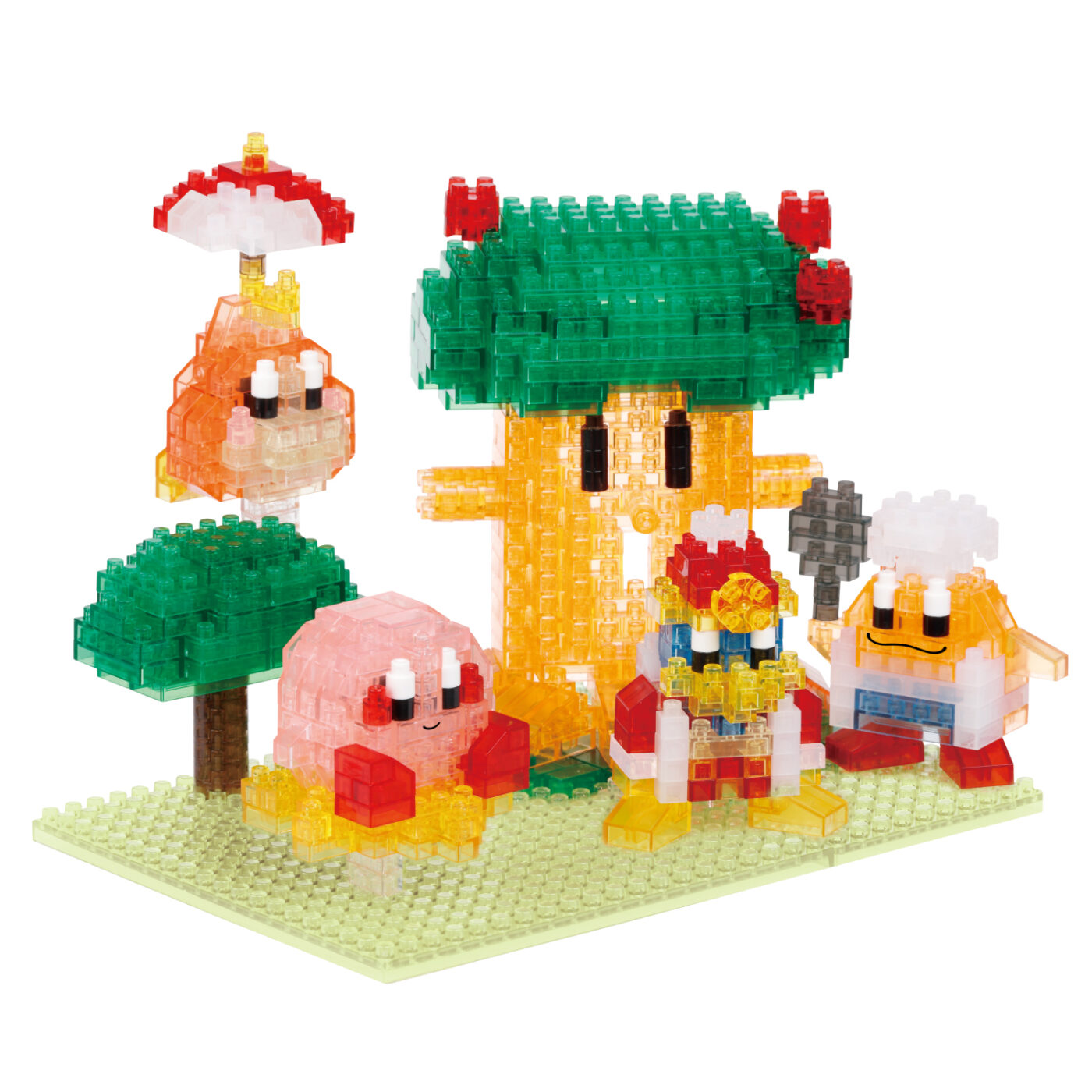
NBM-042, the Dream Land Character Set Clear Version, is the ambitious option: 650 pieces, the same 120×84×80 mm footprint, and five characters — Kirby, King Dedede, Whispy Woods, Waddle Dee and Chef Kawasaki — all in clear bricks. It was a distribution-limited release in Japan, so US availability is inconsistent and prices on the secondary market vary a lot. It’s also the hardest of the group to sort, for the obvious reason that most of the pieces are transparent and shape becomes your only reliable cue.
How hard these actually are
Kawada prints a difficulty level on the packaging, but its web catalog renders that rating as a graphic rather than text, so we can’t quote official numbers for the Kirby sets here. US retail listings for the Character Collection Kirby figures show level 2 on a 1-to-5 scale and describe that as entry level. Shy Gal’s Building Blog independently rates every Kirby single figure 2/5 and Dream Land 3/5, which lines up.
Treat those numbers as a rough guide to sustained attention rather than to skill. Nothing in this line requires technique you don’t already have. What varies is how much of the build is a section where a single wrong piece isn’t obvious until several steps later. On that measure the ranking from documented builds looks roughly like this: Sleep and Inhale are the gentlest, the three Warp Star variants sit in the middle with one awkward final assembly, Ice and Sword add non-identical legs, Fire concentrates real difficulty in the crown, and Dream Land is the only set where the model’s own flexibility becomes a problem.
One number we won’t give you is an average build time. No reliable source establishes one for these sets, and a recorded build by one person is a single data point, not a benchmark.
Tools, surface and sorting
Kawada sells nanoblock tweezers (NB-019) and a nanoblock pad (NB-020), and some instruction sheets reference them. Whether you need them is genuinely contested among experienced builders, and it’s worth seeing both positions rather than being sold the accessories.
In the r/nanoblock beginner threads, several regulars said tweezers are optional at most. AnorhiDemarche recommended forgetting about them entirely, having finished every build without them, and TheAutisticFoodie called both tweezers and a pad beneficial but not essential, noting that pieces only really wander during the first few steps. C10UDYSK13S bought the pad and then didn’t use it for most of their early builds. On the other side, Bexmachina suggested picking up the push-and-pull tools if a kit doesn’t include them, and uses the back of ordinary tweezers to shepherd groups of pieces around.
The counterexample is instructive. In FulishFuji’s recorded build of a Forgotten Land mininano Kirby, they didn’t expect to need tweezers on a set that small and reached for them anyway — to find pieces, to place them, and eventually to pull the model apart when a mistake needed fixing. That’s the pattern worth planning around: tweezers matter less for building than for correcting.
Worth watching before your first mininano: FulishFuji’s speed build shows the row-by-row layering these small figures use, the picture-only instruction leaflet, and a wedge-piece mix-up being repaired mid-build. Video by FulishFuji.
The surface matters more than the tools. A silicone pad or mat gives the model something grippy to sit on, and eltoraaz said a small rubber mat made starting builds much easier. Bexmachina uses a silicone baking mat for the same reason. AnorhiDemarche takes a different approach — a dedicated building surface, in their case the stiff cardboard back of an old coloring book, chosen in a color that contrasts with the pieces so small parts don’t disappear against the background. For a Kirby build that’s practical advice: pink and pale cream pieces vanish on a light wooden table.
On sorting, the beginner threads are unusually consistent. chunkysquizzle empties everything onto a tray and sorts into piles by size and color before starting, and warns that small mistakes are hard to undo later. Storm20111 sorts first, then picks a foundation brick for each step and builds outward from it. Bexmachina organizes before building. The one dissent is about scope rather than principle: AnorhiDemarche prefers keeping only the current step’s pieces on the surface, which keeps the workspace clean but means returning to the bags repeatedly.
For the Kirby sets specifically, sorting pays off in two places. Any set with a clear crown or a clear stand — Ice, Fire, the Clear Version, NBM-042 — asks you to distinguish transparent parts by shape alone. And Dream Land’s two greens are close enough that Shy Gal flagged them explicitly. Sorting those into separate piles before you start is easier than discovering the mix-up at the leaves.
Where Kirby builds go wrong
These are the specific failure points documented across the builds we reviewed, with what to do about each. Every entry is attributed, and none of them come from us testing the sets ourselves.
| Problem | Where it shows up | What to do |
|---|---|---|
| Two similar slope pieces, wrong one used | Reported by FulishFuji on a Forgotten Land mininano, where larger triangular pieces went where smaller ones belonged; also the main caution in Shy Gal’s Kirby Sleep review, where the required slope changed with nearly every brick on the hat | Separate the two slope sizes into different piles before you start. Shy Gal noted the instruction colors for NBCC_141’s two slopes were distinct enough to tell apart, so compare against the diagram rather than by eye |
| A printed piece you didn’t know existed | Shy Gal initially missed that Kirby’s mouth on NBCC_141 is a custom brick with the mouth printed on it | Scan the parts for printed bricks during sorting and set them aside. Kawada states the mouth is printed rather than a sticker on several Kirby sets, so there’s no sticker sheet to tip you off |
| Assembly order matters and the diagram doesn’t say so | The Warp Star’s final step on NBCC_141, per Shy Gal, where the sections had to go together in a particular sequence | Before committing to a step that joins subassemblies, dry-fit them. Shy Gal was able to correct it, but a correction on a completed star means pulling apart work you’ve already done |
| A crown that eats a dozen pieces per step | Shy Gal’s Kirby Fire review, where the fire crown adds many bricks per step and the 1×1 placements were hard to locate | Treat each crown step as several mini-steps. Place the pieces you can identify with confidence first, then work out the 1×1s from the gaps they leave |
| Confusing two shades of the same color | NBH_230’s two greens, one per tree, which Shy Gal found very similar in poor lighting | Sort them apart under bright neutral light before starting, and don’t rely on recognizing them again later |
| Overhanging bricks collapsing under pressure | Whispy Woods’ leaves on NBH_230, per Shy Gal | Support the section from underneath while seating pieces instead of pressing straight down |
| The partly built model flexing in your hands | Shy Gal found Kirby in NBH_230 very flexible mid-build and returned it to the nanoblock pad after picking it up | Build directly on a pad and resist lifting the model to inspect it. Rotate the pad instead |
| An apparent instruction misprint | Shy Gal reported that in NBH_230’s base, a brick appears green in step 27 and clear in step 28, and concluded from the spare-part counts and later steps that it should be green | When a diagram contradicts itself, count your leftover pieces. That’s usually decisive. This is one builder’s reading, not an official correction |
| Legs that aren’t mirror images | NBCC_199 and NBCC_201, where Shy Gal notes the action poses mean the legs differ | Build them separately in the order the manual gives and keep them on opposite sides of the workspace, because they’re nearly indistinguishable once loose |
Studio photography flatters these models. It helps to see the same builds finished on someone’s desk, under ordinary light, by a builder describing the problems as they went.
Instructions and missing pieces
This section is a practical companion to the manufacturer’s official instructions. It does not replace the official diagrams.
Every Kirby set ships with a printed step-by-step leaflet, and Kawada also publishes assembly instructions on its own product pages — the mininano Kirby vol. 2 catalog entry, for instance, links downloadable instructions for individual characters in the assortment. Start there if you’ve lost a leaflet, because the official file will match the set you own. Community archives such as the Nanoblocks Wiki page for NBMC_29 host scans of older assortments, which can help when official downloads aren’t available, though reuse rights on scanned manuals are unclear and the pages aren’t maintained by Kawada.
The leaflets carry almost no text. FulishFuji noted the instruction sheet in their mininano had no writing at all and had to be examined closely throughout. Two reading habits from the beginner threads help. TheAutisticFoodie described placing the two base pieces first in step one, then using the arrows to work out where each subsequent block aligns. AnorhiDemarche went further: the arrow tells you the studs align vertically, and they suggest marking that alignment point in pen on the instructions and identifying the matching point on the model, so you always know which way you’re facing. On a symmetrical pink sphere, that’s more useful than it sounds.
If a piece really is missing, check the bag corners and your work surface first — at 4 mm these disappear easily. Kawada’s after-sales support operates for Japanese domestic purchases only and doesn’t accept overseas inquiries, so US buyers should go to the retailer or the authorized US distributor named on the box label instead.
Handling and displaying the finished model
The single-figure sets are small enough to fit almost anywhere. The one you need to plan for is NBH_230 at 120×84×80 mm — a footprint closer to a coffee mug’s than a figurine’s, and it needs clearance above for the trees.
Stability is designed in on the Warp Star sets. Shy Gal describes Kirby sitting on studs projecting from the star, which makes him very stable, with the star connecting to the clear stand through a ball joint so it can be angled. That ball joint is also the part most likely to loosen with repeated handling, so pick a display angle and leave it.
Getting a finished model off a baseplate is a recurring headache in the community. In one r/nanoblock thread, labchimp9 recommended building on a silicone pad and then attaching the model only lightly for display, leaving enough room to lever it off with tweezers later — that way the baseplate can be reused without dismantling the figure. If a model is already firmly seated, they suggested pulling it upward as a unit, or separating the upper body from the legs and removing the feet from the plate. Their last resort was breaking the model as close to the plate as possible and rebuilding it. Their example was a Pokémon figure rather than a Kirby, so treat it as general technique.
None of these sets are toys once built. Printed face bricks and clear crown pieces are the parts that show handling wear first.
Buying in the US
The Character Collection Kirby figures and the mininano assortments both circulate through US retail — Amazon, BoxLunch and Barnes & Noble among them — while NBM-042 and older assortments like NBMC_29 mostly turn up through Japanese import shops or the secondary market. Import listings are where you’ll find discontinued items, but also where prices swing hardest.
One thing worth checking on the box. US listings for these sets state that authorized product carries a distributor warning label, and that only items shipping from within North America come from authorized US retailers. Confusingly, listings name different distributors — older mininano pages reference Bluefin, newer ones reference Bandai Namco — which reflects a change in who handles Kawada distribution for the US rather than a counterfeit signal. The presence of a distributor label, and the fact that the box carries the Nintendo and HAL Laboratory copyright notice, are the useful checks. A label also entitles US buyers to domestic product support, which matters given that Kawada’s own support desk doesn’t handle overseas inquiries.
We don’t list prices here because they move constantly across US retail and import channels, and a figure we quoted today would mislead you next month.
Questions readers keep asking
Which Kirby nanoblock should I build first?
NBCC_141 Kirby. It’s the recognizable Warp Star pose, the face is printed rather than stickered, and independent reviews describe most of it as straightforward with one section — the star’s final assembly — that rewards reading ahead. If 220 pieces feels like too many, NBCC_161 Kirby Sleep is 160, though its slope-heavy hat is arguably fussier per piece.
Are NBCC_140 and NBCC_141 the same set?
Structurally, yes. Kawada states NBCC_141 uses the same shape as NBCC_140 Kirby 30th and does not include the 30th anniversary logo sticker that the earlier version applied to Kirby’s back.
Can I choose which character I get in a mininano box?
No. Kawada sells mininano in blind packaging. Individual packs are a lottery; a box of six is what completes an assortment.
Do I need tweezers?
Not for building, according to most experienced builders in the r/nanoblock threads, several of whom have never used them. They become genuinely useful for correcting mistakes — FulishFuji used tweezers specifically to separate blocks when repairing a mis-placed piece. If you buy one accessory, a grippy pad or mat has broader support.
How long does a Kirby nanoblock take to build?
There’s no reliable figure to quote. Published build videos include commentary and pauses, so they document one person’s session rather than a comparable build time. Plan for an unhurried sitting rather than a target.
Are these suitable for kids?
Kawada’s stated target age is 12 and up across the Kirby range, and every listing carries a small-parts choking-hazard warning. Some US retail pages show 8+, but the manufacturer’s figure is the one to go by.
Which Kirby set is the hardest?
Of the sets with documented builds, NBH_230 Kirby Dream Land carries the highest independent difficulty rating at 3/5, largely because of its flexibility mid-build, overhanging leaf bricks and two near-identical greens. Among single figures, NBCC_200 Kirby Fire’s crown drew the most specific criticism for packing too much into too few steps.
Where to go from here
If you’re buying one set, note the model number and not the retail name before you check out — that single habit prevents most duplicate purchases in this line, given how many times the same 220-piece Kirby has been reissued. If you already own a Kirby set and hit a step that didn’t match what you expected, we’d like to hear which one. Reader reports on specific steps are how a guide like this gets more precise than the manual.